Last updated: June 2026 — prices verified June 2026.
I’ve lived in Wicker Park for nine years. I visit New York two or three times a year for work. I have strong views about Chicago deep dish that I will share whether or not you ask. Here’s the honest comparison.
The Quick Answer: Which City for Which Trip
Not everyone wants a 3,000-word comparison. Here’s the short version.

Cost: Chicago is Significantly Cheaper
New York costs around 48% more than Chicago across accommodation, food, and transport. That’s not a marginal difference — it’s the gap between a comfortable mid-range trip and a budget-strained one.

Accommodation: A decent hotel in a good Chicago neighborhood (Wicker Park, West Loop, River North) runs $120–180/night. The equivalent in Manhattan runs $250–350+/night. Chicago’s boutique hotel scene gives you more character for less money — for the same $200, you’re getting a significantly better room in Chicago than in New York.
Food: Restaurant meals average $15–30 in Chicago versus $20–40 in New York for comparable quality. Street food and casual spots are cheaper across the board in Chicago. A Chicago-style hot dog: $4–6. A New York pretzel from a cart: $4. The pretzel is not a meal. The hot dog is.
Transit: Chicago’s L is $2.50/ride with a $5 day pass. The NYC subway is $2.90/ride with a $34 weekly cap. For a 3–5 day trip, Chicago transit is meaningfully cheaper and the system is significantly easier to understand. The L’s color-coded lines and grid-based coverage means most visitors figure it out on day one; the NYC subway’s complexity can cost you half a morning on a short trip.
Drinks: Beer in a Chicago neighborhood bar: $5–7. Beer in a comparable Manhattan bar: $8–12. Cocktail in River North (Chicago’s most expensive bar area): $14–18. Cocktail in a comparable New York bar: $18–24. If you drink, multiply this difference by the number of evenings. It adds up.
⚠Real Talk
New York is expensive in a way that normalises itself while you’re there. You stop noticing you’re paying $22 for a burger until you get back home and look at your bank statement. Chicago has the same food, the same bar scene, the same architecture interest — for 30–40% less across the board. That’s not nothing.
Food: The Actual Comparison
This is where Chicago people get loud and New York people get defensive. Here’s the honest version.

Deep dish vs NY pizza: They are not the same food and comparing them is a category error. Chicago deep dish — butter crust, cheese on the bottom, chunky tomato sauce on top, baked 45 minutes — is a casserole. New York pizza — thin, foldable, coal-fired, eaten standing up — is pizza in the Italian sense. Both are originals. Both are worth eating. Saying one is “better” misses the point. What I will say is that the best deep dish at Lou Malnati’s on Wrigleyville, eaten in the restaurant, is a specific experience that has no equivalent in New York because New York doesn’t make it.
Italian beef: A Chicago original with no New York equivalent. Thin-sliced seasoned beef, dipped in au jus, served on an Italian roll with giardiniera. Al’s Beef on Taylor Street, ordered wet dipped. About $9–12. You cannot get this in New York. This matters.
Pastrami / deli sandwiches: New York’s answer. Katz’s Delicatessen pastrami sandwich — the one from When Harry Met Sally — is real, is excellent, and costs about $30 for a sandwich. Also a specific experience with no Chicago equivalent. The score is even: two originals, both worth eating, neither city wins.
Overall food scene: New York has more variety — every cuisine on earth, at every price point, 24 hours a day. Chicago has deeper execution in its specific categories. If you’re after diversity, New York. If you’re after the best deep dish, Italian beef, blues bar snacks, and Logan Square restaurant cooking, Chicago — and Chicago is also better value across every category.
Full deep dish breakdown: Best Deep Dish Chicago.
Getting Around: L vs Subway
Both cities have good public transit. Chicago’s is easier to understand. New York’s covers more ground.

The Chicago L runs on color-coded lines that align with the city’s grid. Blue Line goes west (O’Hare, Wicker Park, Logan Square). Red Line goes north-south (Lincoln Park, Wrigleyville). Green Line hits Pilsen and the south side. Brown Line does a loop through the north side neighborhoods. You can understand the system in an hour and use it confidently by day two.
The NYC subway covers Manhattan comprehensively and reaches all five boroughs. It also has express trains, local trains, service changes, late-night shutdowns on certain lines, and a map that requires genuine study before you can navigate it efficiently. For a first-time visitor on a short trip, the cognitive load of the NYC subway is real. Google Maps helps. It also sometimes gets it wrong.
Both cities: take the transit. Do not take taxis or rideshares for standard movement around the city — the cost adds up and the transit is faster on most routes.
Architecture: Chicago Wins, and It’s Not Close
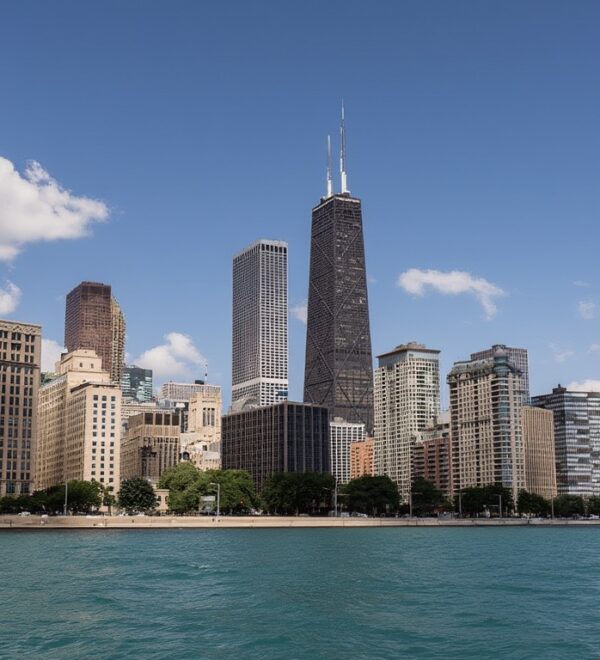
New York has the Empire State Building, the Chrysler Building, and a skyline you’ve seen in every film since 1930. All genuinely impressive. Chicago invented modern architecture — the steel frame skyscraper was born here, the Chicago School defined what tall buildings could look like, and the riverfront gives you a canyon of 20th-century buildings at eye level in a way Manhattan doesn’t.

The Chicago Architecture Cruise ($45, 90 minutes) is, in my opinion, the best single tourist activity in any American city. You’re on the Chicago River looking up at the Wrigley Building, Tribune Tower, the Marina City corncobs, the Aqua Tower — while a guide who knows the history explains why each building exists and what it changed. New York has architectural boat tours. They don’t have the same concentrated density of significant buildings at river level that Chicago does.
The Art Institute of Chicago’s architecture collection is also better than anything New York has in the same category. This isn’t boosterism — it’s where the original Sullivan architectural drawings are held.
Neighborhoods: Chicago is More Navigable
New York has more neighborhoods — Manhattan alone has more distinct areas than Chicago does as a whole city. This is overwhelming in a good way if you’re staying for two weeks and a stressful way if you’re here for four days and trying to decide between Williamsburg, the West Village, and the Upper West Side.
Chicago’s neighborhood structure is more digestible. Wicker Park and Logan Square are the main draws for food and bars — connected by the Blue Line, walkable within each neighborhood, distinct from each other in character. Pilsen for murals and Mexican food. The West Loop for serious restaurants. Lincoln Park for lakefront access. You can meaningfully understand Chicago’s neighborhood map in a day and navigate it confidently for the rest of the trip.
For a full breakdown: Chicago Neighborhoods Guide.
What Chicago Does Better Than New York
A partial, intentionally one-sided list from someone who lives here:
The lakefront: Lake Michigan’s shoreline through Chicago is 18 miles of public beach, trail, and park. Free, accessible from anywhere in the city via the L, and genuinely beautiful. Manhattan’s waterfronts are largely inaccessible — rivers rather than a lake, with highways between the city and the water for most of the island’s length.
Blues and jazz authenticity: Chicago’s blues scene is not a reconstruction — it’s the source. Buddy Guy’s Legends, the Green Mill, the Rosa’s Lounge — these are real venues with real lineages. New York’s jazz scene is also legitimate and excellent. But for blues specifically, Chicago is the city.
Midwestern hospitality: This one is harder to quantify and easier to notice. Chicago service, bar culture, and general stranger-interaction is warmer than New York. Less performative. The cab driver who has an opinion about the Cubs, the bartender at the Green Mill who’ll tell you which booth Al Capone sat in — this is not manufactured. New York has its own energy that plenty of people prefer. Chicago just has a different default temperature.
What New York Does Better Than Chicago
The honest version, from someone who goes there regularly:
Scale and variety: New York has more of everything — more restaurants, more bars, more museums, more music venues, more film screenings, more theatre. If you want the largest possible selection of anything, New York wins by volume.
Broadway and theatre: Chicago has excellent theatre — the Steppenwolf, the Goodman, the Second City. None of it is comparable to Broadway’s concentration of major productions. If theatre is the reason you’re travelling, New York.
Museum depth: The Met, MoMA, the Guggenheim, the Whitney, the Natural History Museum — New York’s museum cluster is arguably the best in the world. Chicago’s Art Institute, Field Museum, and Shedd Aquarium are excellent. The volume and variety in New York is larger.
The energy: Some people find New York’s pace exhilarating; some find it exhausting. Chicago has a distinct energy that’s urban without being overwhelming. Which you prefer is personal. But if you specifically want New York energy — that particular friction and density — Chicago is not a substitute.
Weather: Chicago’s One Clear Disadvantage
I’m going to be straight about this because it matters more than most Chicago enthusiasts admit.
Chicago winters are genuinely bad. Not “a bit cold” — bad. January temperatures average -3°C (27°F) but the wind off Lake Michigan makes it feel like -15°C or worse on bad days. The “Windy City” nickname has a specific physical meaning when you’re walking west on a January morning and the lake wind hits you on Michigan Avenue. Layers, a proper coat, and realistic expectations are required.
New York winters are cold but significantly more manageable — average January temperatures around 3°C (37°F), with wind but not the same lake-effect situation. If you’re visiting in December, January, or February, New York is the more comfortable city.
The flip side: Chicago summers are excellent. June through August is warm (22–28°C), the lakefront is fully operational, Millennium Park has free outdoor concerts, and the whole city feels like it’s making up for six months of cold. The outdoor bar and restaurant scene in Chicago in July is genuinely great.
New York summers are hot and humid in a way that’s less comfortable than Chicago summers — July averages around 29°C with high humidity and little relief. The city doesn’t stop, but outdoor activities in July in Manhattan can be genuinely unpleasant by early afternoon.
Best time for Chicago: May–June and September–October. Best time for New York: same shoulder windows, or winter if you specifically want the Christmas market energy. For the full Chicago seasonal breakdown: Best Time to Visit Chicago.
Day Trips: Different Options, Similar Quality
Both cities have good day trip options — the question is what kind of day trip you want.
From Chicago: Indiana Dunes National Park (1 hour by Metra South Shore Line, $10–15 each way) is 15 miles of Lake Michigan shoreline with hiking trails and actual dunes. The drive to Galena — a historic 19th-century town in the northwest corner of Illinois — takes 2.5 hours and is genuinely worth it for a weekend. Milwaukee is 90 minutes north: beer, lakefront, and a fraction of the crowds of Chicago’s summer scene. Car rental for these: see Chicago Budget Guide for current rates.
From New York: The Catskills (2–3 hours north) for hiking and Hudson Valley scenery. Philadelphia is 1.5 hours by Amtrak ($30–60). The Hamptons in summer — 2.5 hours by train, extremely expensive once you’re there. Newport, Rhode Island (3.5 hours) for Gilded Age mansions and decent sailing weather. New York day trips skew more expensive than Chicago equivalents — the Amtrak options in particular cost significantly more than Chicago’s Metra connections.
The Confession: What I Got Wrong About New York
A colleague from London asked me to recommend either Chicago or New York for a week in the US. I said Chicago, obviously, and he went to New York first, then Chicago.
He called me from New York on day three, slightly stunned by the cost of things, to say that his hotel in Midtown was $340/night for a room smaller than his flat in Manchester. He then spent a week in Chicago, stayed in Wicker Park for $155/night at a boutique hotel with a rooftop bar, ate at three restaurants that he described as the best meals of his trip, and went home saying Chicago was the better trip.
I told him this would happen. He didn’t believe me until he’d done both. This is now my standard evidence for the Chicago-first argument: hear it from me now, or learn it from your hotel bill in Midtown.
FAQ: Chicago vs New York
- Is Chicago or New York better to visit?
- Chicago is better for most first-time visitors — lower cost, easier to navigate, excellent food and architecture, and less logistically overwhelming. New York is better if you specifically want Broadway, the Met, or the full scale of what the largest US city offers. For a short trip on a budget, Chicago wins clearly. For a longer US trip, do both.
- Is Chicago cheaper than New York?
- Yes — significantly. New York costs roughly 48% more overall. Hotel rooms that are $120–180/night in good Chicago neighborhoods run $250–350+ in comparable Manhattan areas. Restaurant meals average $15–30 in Chicago versus $20–40 in New York. Transit is $2.50/ride in Chicago vs $2.90 in New York, and Chicago’s $5 day pass is better value than New York’s per-ride pricing for casual visitors.
- Which city has better food — Chicago or New York?
- New York has more variety; Chicago has better value and stronger originals. Chicago deep dish, Italian beef, and the Chicago-style hot dog are originals with no New York equivalent. New York’s pastrami, bagels, and pizza are originals with no Chicago equivalent. Both cities have excellent dining scenes. Chicago’s mid-range and neighborhood restaurant cooking is better value per dollar — significantly so.
- Is Chicago safe compared to New York?
- Both cities are safe in tourist and central neighborhoods. Chicago has higher violent crime rates than New York in certain south and west side areas that visitors don’t typically go to. The neighborhoods covered in this guide — Wicker Park, Logan Square, the Loop, Lincoln Park, West Loop — are as safe as comparable New York neighborhoods. Standard city awareness applies in both.
- How many days do you need in Chicago vs New York?
- Chicago: 4–5 days is enough to see the main architecture, eat well, explore 2–3 neighborhoods, and do one day trip. New York genuinely needs 7+ days to scratch the surface — it’s a much larger, more complex city. If you have a week total: one city, not both. Two weeks: both, Chicago first.
- Should I visit Chicago or New York first?
- Chicago first. It’s easier to navigate on a first US trip, more affordable, and sets reasonable expectations. Arriving in New York after Chicago means you appreciate New York’s scale and density without being surprised by its cost. Arriving in Chicago after New York, many visitors find it easier and cheaper — which is accurate, but sets a comparison frame that isn’t fair to either city.
The Bottom Line
Chicago is the better first US city for most travellers. It has the architecture, the food, the neighbourhood culture, and the music scene — for 30–48% less than New York. It’s navigable, it’s honest about what it is, and it doesn’t require a week of orientation before you can use it properly.
New York is irreplaceable for what it does at scale. If you want Broadway, the Met, and the specific energy of the world’s most concentrated city, New York is the only answer.
If you have one trip: Chicago. If you have two weeks in the US: both. Start in Chicago.
Everything you need to plan the Chicago half: Things to Do in Chicago and Chicago Budget Guide. If you’re still deciding on timing, the seasonal guide covers the month-by-month breakdown so you know exactly when to avoid the January wind and when to show up for the lakefront at its best. Questions in the comments — I’ll tell you which city to book first and I’ll be right about it.
The Practical Side: Itinerary Notes for Doing Both Cities
If you’re doing both Chicago and New York on one trip, here’s the practical framing that makes both cities work better.
Flight logistics: Chicago O’Hare and New York JFK/EWR are both major international hubs. Flights between the two cities run under 2 hours and cost $80–180 one-way on most major carriers if you book two or more weeks ahead. The train between Chicago and New York (Amtrak Lake Shore Limited) takes 19 hours — a specific experience worth knowing about if you have the time and the inclination, but not the practical choice for most trips. The plane is the answer.
Chicago first, then New York: The calibration argument — Chicago sets reasonable cost and crowd expectations, New York then delivers its scale without the sticker shock being the dominant experience. If you arrive in New York first and spend three days paying $300/night for a hotel room and $28 for a burger, Chicago will feel like a discount version of the same thing. It isn’t — Chicago is a distinct city with its own character — but the mental frame is wrong. Arrive in Chicago first, understand Chicago on its own terms, then experience New York as a different and more expensive version of urban life rather than a better or worse one.
Time allocation: If you have 10 days total, do 4 in Chicago (enough for the architecture, two neighborhoods, the food essentials, and one day trip option) and 6 in New York (enough to scratch the surface of Manhattan and one outer borough). If you have 7 days, do 3 in Chicago and 4 in New York — you lose the day trip and one neighborhood in each city, but the core of both is manageable. If you have 5 days total, pick one city. Do it properly. Come back for the other.
Budget planning: A 10-day Chicago-then-New York trip at mid-range will run approximately $3,500–4,500 per person all-in (flights, accommodation, food, activities, transit). About 55–60% of that will be the New York half. Budget accordingly when you’re planning — the Chicago days are significantly cheaper, which means you can front-load some experiences there and have more financial breathing room for the New York leg.
Neighborhoods: The Chicago-New York Parallel
Both cities have neighborhood equivalents that help calibrate what you’re looking for.
If you liked Williamsburg in Brooklyn, you’ll like Wicker Park in Chicago. Independent restaurants, music venues, the specific energy of a neighborhood that gentrified in the 1990s and is still arguing about it. Blue Line to Division from downtown Chicago; L train to Marcy Avenue from Manhattan.
If you liked the West Village in Manhattan, you’ll like Lincoln Park in Chicago. Expensive residential streets, good restaurants, lakefront access instead of the Hudson. Less artsy than either city’s “cool neighborhood” equivalent, but well-maintained and pleasant.
If you liked Bushwick in Brooklyn for the murals and art galleries, Pilsen in Chicago is the equivalent — Pink Line to 18th Street. The National Museum of Mexican Art and the 18th Street mural corridor are Pilsen’s answer to the Bushwick mural walls, and the food (Carnitas Uruapan, Nuevo León) is better than anything in the Bushwick food scene at the same price point.
Chicago doesn’t have a direct equivalent to Manhattan itself — there’s nothing in Chicago that gives you the concentrated density and vertical scale of midtown Manhattan. But Chicago doesn’t need one. The Loop is a dense, walkable downtown with architecture that’s more interesting to look at than midtown Manhattan’s commercial blocks, and the L gives you the entire city from a $2.50 base. The comparison frame where you’re looking for “which city has the bigger version of X” misses the point of Chicago. It’s a different city, not a smaller version of New York.