Last updated: June 2026 — prices and events verified June 2026.
Here’s what I actually tell people when they ask when to visit Chicago: if you want the version of the city that looks like the version in your head — lakefront, outdoor concerts, rooftop bars, the skyline over Lake Michigan at sunset — come in June. If you want the version that locals prefer, come in September. The city is still fully functional, the tourists are thinning out, you can get a Saturday reservation at a Logan Square restaurant without planning three weeks ahead, and the temperature is somewhere between “finally bearable” and “perfect.” These are not the same answer, and which one applies to you depends on what kind of trip you’re planning.
I’m Ryan. I’ve lived in Wicker Park for nine years. Before that, Naperville suburbs — so I’ve done both sides of the Chicago experience. What follows is what I’d say to a friend over coffee at my Logan Square diner: the real seasonal breakdown, the events that actually matter, and the months I’d steer you away from unless you have a specific reason to go.
Summer (June–August): The Case For It
Summer in Chicago is the reason the city has a reputation. June through August is when everything the city does best happens simultaneously: outdoor concerts, lakefront swimming, rooftop bars, festivals every weekend, and the skyline reflected in Lake Michigan at an hour of evening when the light turns everything gold. If you are visiting Chicago for the first time, summer gives you the version of the city that people mean when they say “Chicago is great.”
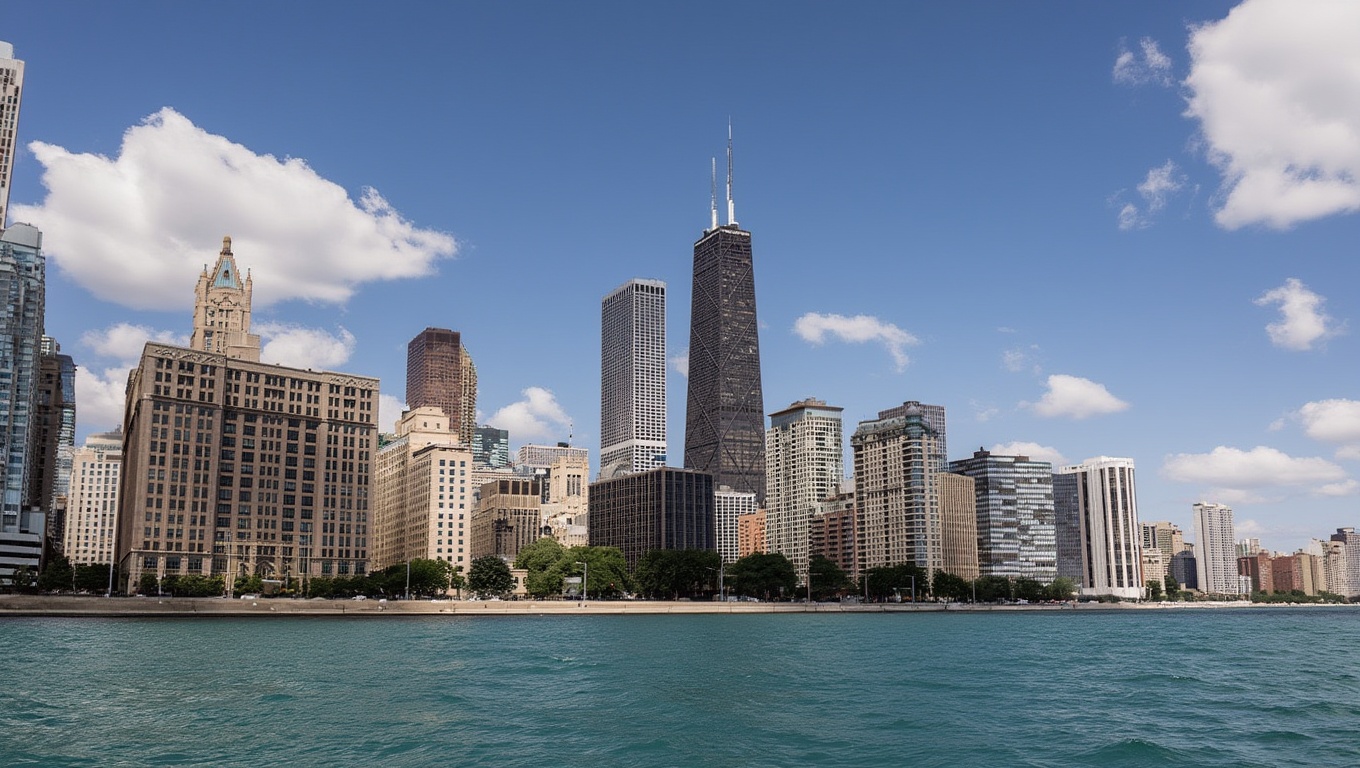
June is my pick within summer. The city wakes up fully by Memorial Day weekend, but June proper — after the holiday rush — has warm temperatures (usually 70–80°F), low humidity compared to what’s coming, and enough daylight to make evenings on the lakefront feel like a bonus you weren’t expecting. The outdoor movie series starts. The Blues Festival runs over the first weekend of June in Grant Park (it’s free). The lake is swimmable. This is Chicago at its most straightforwardly enjoyable.
July is peak summer and peak everything. Taste of Chicago runs in Grant Park (one of the largest food festivals in the country, free admission). The Air and Water Show at North Avenue Beach packs the lakefront with crowds that make the city feel like its version of maximum. Navy Pier fireworks run Wednesday and Saturday nights throughout summer. The temperature averages in the mid-80s°F (around 30°C). And the humidity, by late July, can absolutely hit like a brick — particularly on the days when Lake Michigan gets warm enough that it stops cooling the lakefront breeze. On a humid July afternoon in the Loop, the Art Institute is not optional — it’s necessary. This is not a complaint; it’s context.
August is Lollapalooza month. Grant Park, four days, 400,000 people. The city around Grant Park and the South Loop is genuinely difficult to navigate that weekend if you’re not going. If you are going — plan every meal and transport option in advance, because the lines at every restaurant within a mile of the park are an hour long. August also has the Chicago Jazz Festival (Labor Day weekend, free, Millennium Park). The weather in August runs slightly hotter and more humid than July. If you’re heat-sensitive, June is your summer month.
•RYAN’S HONEST TAKE
Summer is when Chicago is at its most photogenic and most expensive. Hotel rates in July run 40–60% above what you’d pay in April or November. Restaurants are packed. Popular attractions have lines. None of this makes summer wrong — it makes summer the classic trade-off between “great experience” and “more effort and money.” Know what you’re buying before you book August.
September: The Month Locals Actually Prefer
Every Chicagoan I know — friends, neighbors, people I’ve met at bars who asked where I was from — gives the same answer when someone asks them when to visit: September. There is genuine consensus on this.
The logic: summer temperatures without summer humidity. The lake stays warm enough to swim through mid-September (water temperature peaks in late July–August and holds through September). The festivals don’t stop — North Coast Music Festival runs Labor Day weekend, Chicago Jazz Festival is Labor Day, and the neighborhood festivals continue through the month. But the tourist numbers start dropping after Labor Day, which means restaurants are easier, hotel rates are coming down, and you can actually walk through Millennium Park at a normal pace.
The 606 — the 2.7-mile elevated trail running through Wicker Park, Bucktown, Logan Square, and Humboldt Park — is at its best in September. The trees along the trail start turning, the morning light is low and sideways, and the commuters on bikes at 7am are the actual neighborhood, not the tourism economy.
The Chicago Marathon is in October (see Fall section), but training runners take over certain lakefront paths in September. This is only relevant if you’re trying to use them, and even then it’s more texture than obstacle.
Hotel rates in September: noticeably below summer peak, particularly after Labor Day. Budget for a basic room at $130–200/night, versus the $180–275+ you’d pay in July and August. Airbnb rates similarly drop.
Spring (April–May): The Underrated Option
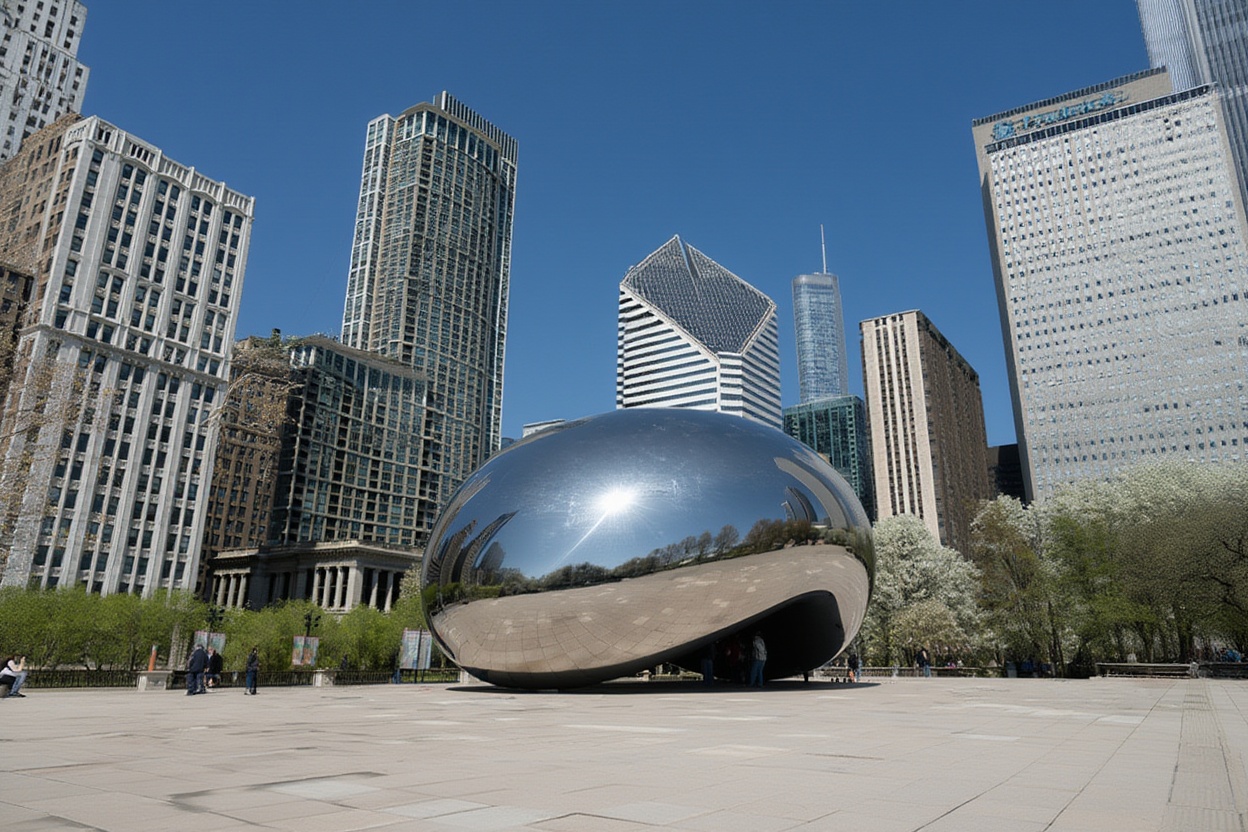
April and May are when Chicago shakes off winter and remembers it’s supposed to be a city. The trees bloom along the lakefront path. Millennium Park gets the first real crowds of the year but nothing approaching summer volume. Restaurant patios open, optimistically at first and then with genuine justification as May warms up.
April runs 40–60°F (4–15°C). Cold for some, genuinely spring for Chicagoans who’ve just survived February. St. Patrick’s Day is in March (the river dyeing is one of the genuinely good tourist things Chicago does — the river turns green, it’s bizarre, it’s worth seeing once). April has the Chicago Flower & Garden Show at Navy Pier and a general sense of the city exhaling after winter. Hotel rates are at their lowest outside of January–February.
May is when spring becomes convincing. Temperatures reach the 60s and 70s (15–25°C). The 606 trail fills with people who clearly spent winter waiting for this exact moment. The Sueños Festival runs Memorial Day weekend (late May) — a Latin music festival in Grant Park that’s a big deal for the city and makes that particular weekend genuinely busy. Avoid Memorial Day weekend if you want cheap hotels; embrace it if you want a festival.
The honest case for April–May: you get the full city infrastructure (everything is open, unlike winter when some attractions reduce hours), lower prices than summer, and weather that’s good for walking neighborhoods — which is the actual Chicago activity, not the tourist-brochure version.
Fall (October–November): The Secret Window
October might be the best month in Chicago that nobody puts in their “best time to visit” guide, so I’m putting it here.
The Chicago Marathon runs in early October — the second Sunday of the month, usually. It’s one of the six World Marathon Majors. If you’re running it, you’ve already planned your trip. If you’re not, the marathon transforms the lakefront and downtown into a spectator sport for a day — free to watch, genuinely electric at the finish line on Columbus Drive. The city is packed on marathon weekend but in a local-feeling way rather than a tourist-feeling way.
The fall colors along the North Shore, in Lincoln Park, and on the 606 trail hit in mid-to-late October. Not Vermont, but enough that the walking neighborhoods — Wicker Park, Ukrainian Village, Lincoln Square — are objectively at their most photogenic from about October 5–25 depending on the year.
Temperatures in October: 45–65°F (7–18°C). Jacket weather. The lakefront wind picks up, which is the real reason Chicago earned the “Windy City” name — the lake effect in fall and winter is not a myth. Dress accordingly.
Lincoln Square Oktoberfest runs late September–early October: a neighborhood festival in Lincoln Square (Brown Line, Western stop) that is exactly what it sounds like and significantly better than the tourist versions. German beer, local bands, the neighborhood at its annual peak.
November gets cold fast (30–50°F / -1–10°C). Some rooftop bars close. The lakefront path becomes wind-blasted. But November hotel rates are among the lowest of the year outside January–February, and the indoor Chicago — the museums, the restaurants, the music venues — is fully operational and un-crowded. If your trip is 80% eating and 20% sightseeing, November is legitimate.
Which Neighborhoods to Visit by Season
Chicago’s neighborhoods have their own seasonal logic that most guides skip. A quick breakdown:
Wicker Park and Bucktown (Blue Line, Damen stop): best April through October, when the outdoor bar patios and the 606 trailhead are the reason to be there. Winter in Wicker Park is still functional — the bars are warm and good — but the neighborhood’s energy is outdoors.
Logan Square (Blue Line, Logan Square stop): the Logan Square Farmers Market runs Sundays May through October and is one of the better farmers markets in a city that takes markets seriously. Restaurant-wise, Logan Square is the current answer to “where should I eat in Chicago” regardless of season — the indoor dining scene is strong year-round.
Pilsen (Pink Line, 18th Street stop): the murals are best photographed in spring and fall light — summer sun washes them out; winter dulls the colors. The neighborhood itself and its Mexican food and coffee scene work year-round. Pilsen Fest runs in late summer.
Lincoln Square (Brown Line, Western stop): the German-heritage neighborhood is best in early October during Oktoberfest. Also genuinely good in winter — the Christmas market at the Goethe-Institut is small but real, and the neighborhood bars feel appropriately cozy in cold weather.
The Lakefront and Museum Campus: June through September, full stop. The lakefront path, North Avenue Beach, Montrose Beach, the outdoor terraces at the Museum Campus — these only make sense when the weather makes sense. In November through April, the lakefront is for committed runners and people testing their wind tolerance.
Winter (December–February): The Honest Case
I’m not going to pretend Chicago in January is comfortable. It isn’t. Wind chills of -10°F (-23°C) are real and they happen. The lakefront is inhospitable. The Magnificent Mile in February is a wind tunnel. These are facts.
Here’s what’s also true: Chicago in winter has the lowest hotel rates of the year (30–40% below summer, sometimes more), the shortest lines at the Art Institute and the Museum of Science and Industry, and the indoor food and bar scene fully operational and serving locals rather than tourists. Chicago Restaurant Week runs in late January — two weeks when restaurants across the city offer prix-fixe menus at fixed prices. It’s the best time to eat expensively for less.
December splits the difference. The first half of December has holiday markets (the Christkindlmarket in Daley Plaza is a legitimate event — German-style market, mulled wine, in the plaza since 1996) and a city that’s decorated and functional. Temperatures drop toward winter by mid-December. Hotel rates are higher around Christmas week than in January.
January–February: the brutal months. Correct for: people who have a specific indoor reason to be here, people testing their weather tolerance, people who want to see the Chicago Architecture Foundation river cruise at 15°F without a line. Not correct for: first-time visitors who want the lakefront Chicago experience.
Month-by-Month Events Cheat Sheet
The events are often the real answer to “when should I come”:
March: St. Patrick’s Day river dyeing (mid-March — the river turns green, it’s absurd, it’s great). Chicago Flower & Garden Show (Navy Pier).
April: Opening of outdoor spaces. Chicago Cubs and White Sox home openers. Architecture and history tours restart in full.
May: Sueños Festival (Latin music, Grant Park, Memorial Day weekend). Chicago Craft Beer Festival. 606 trail at its most crowded since last September.
June: Chicago Blues Festival (first weekend, Grant Park, free). Chicago Pride Parade (late June, Boystown/Lakeview). Chicago SummerDance starts. Outdoor movie season begins.
July: Taste of Chicago (Grant Park, week of July 4). Air and Water Show (North Avenue Beach). Navy Pier fireworks (Wed and Sat nights).
August: Lollapalooza (Grant Park, first weekend — tickets required). Chicago Jazz Festival (Labor Day weekend, free, Millennium Park). Air and Water Show continues.
September: North Coast Music Festival (Labor Day weekend). Neighborhood festivals continue. The 606 starts its fall season. Hotel rates begin dropping.
October: Chicago Marathon (second Sunday — register far in advance). Lincoln Square Oktoberfest (late September–early October). Fall colors peak mid-month.
November: Chicago International Film Festival. Chicago Craft Beer Festival (second edition). Quietest month of the year.
December: Christkindlmarket (Daley Plaza, daily from late November through Christmas Eve). Holiday window displays along State Street.
January: Chicago Restaurant Week (late January, two weeks). Lowest hotel rates. Chicago Architecture Biennial years (alternate years).
February: Chicago Restaurant Week (may extend). Valentine’s events. Coldest average temperatures.
Practical Information
Getting around: The CTA (elevated and subway system, called the L) covers the whole city. A Ventra card with a day pass costs $5 and gets you unlimited rides. The Blue Line from O’Hare airport to downtown runs 24 hours and costs $5 — there is no reason to take a taxi or rideshare from O’Hare unless you have a lot of luggage and a budget that supports it. The Brown Line connects Lincoln Square and Wicker Park to the Loop. The Red Line runs the lakefront corridor. Learn three lines and you’ll cover 80% of visitor destinations.
Budget benchmarks: Hostel dorm $35–55/night. Basic hotel room $160–275/night in summer, $110–170 in shoulder season, $80–130 in January–February. Airbnb/apartment $95–180/night in summer. A hot dog from a street cart: $5–6. Dinner for two at a mid-range Logan Square restaurant: $35–70. Craft beer at a neighborhood bar: $7–8. CTA day pass: $5.
Neighborhoods worth planning around: Wicker Park (Blue Line, Damen stop) for bars, vintage shops, and brunch. Pilsen (Pink Line, 18th Street) for murals and Mexican food. Logan Square (Blue Line, Logan Square stop) for restaurants and farmers market. Lincoln Square (Brown Line, Western stop) for German heritage and neighborhood feel. Bronzeville (Red Line, 35th-Bronzeville stop) for blues history and architecture.
What Chicago’s Weather Actually Feels Like: A Month-by-Month Reality Check
Most seasonal guides give you temperatures. What they miss is how Chicago’s specific geography — a grid city on a flat plain next to a large lake — changes what those temperatures actually feel like on the ground.
January (avg high: 30°F / -1°C): The lake is coldest in January and February, which makes the wind off it genuinely brutal. The “feels like” temperature on a January day with a 15 mph north wind off Lake Michigan can be 20°F below the actual temperature. This is not an exaggeration — wind chill advisories in Chicago are issued when the combination of temperature and wind creates health risks. Dress in real winter gear. This means wool or synthetic base layers, a wind-blocking outer layer, waterproof boots rated below 0°F, and a hat that covers your ears. Chicago cold is not “wear a puffer jacket from Uniqlo” cold in January. It’s serious.
April (avg high: 58°F / 14°C): The most variable month. You can have a 70°F (21°C) day on April 15 and a 35°F (2°C) day on April 20 in the same week. This is real and happens frequently. Pack for both. A light down jacket and a layer system is correct for April; a single medium-weight jacket is not. The upside: if you hit one of April’s warm days, the city is genuinely beautiful — the lakefront path filling up again, the restaurant patios opening, the neighborhoods exhaling after winter. The downside: you might not hit one.
June (avg high: 79°F / 26°C): The sweet spot. Warm enough for outdoor everything, low enough humidity that the afternoon is still comfortable. The lake has warmed enough for swimming by mid-June (water temp around 60°F / 15°C — cold but manageable for most people). The longest days of the year fall in June, which means you get 15 hours of daylight to work with. This is Chicago at its most straightforwardly pleasant.
August (avg high: 83°F / 28°C): The humidity month. Chicago’s lakefront can trap humid air in summer, and August is when you notice it — the dew point climbs, the air doesn’t move, and walking eight blocks to the Art Institute at 2pm leaves you needing to sit in the air conditioning for 10 minutes before you’re comfortable again. The Art Institute’s air conditioning is excellent. This is not a coincidence.
October (avg high: 60°F / 16°C): My favorite month in Chicago, objectively. The humidity is gone, the temperature is in the range where you want a jacket but not a real coat, the trees along the lakefront and the 606 trail are turning, and the neighborhoods are at their most photogenic. The Chicago Marathon is in early October. The Cubs might be in the playoffs. The restaurant patios are still open for another few weeks. This is the version of Chicago that residents have earned after surviving August.
December (avg high: 36°F / 2°C): The Christkindlmarket runs in Daley Plaza from late November through Christmas Eve. It’s the best tourist thing in Chicago in December and the thing I consistently recommend to people visiting for the holidays. German-style market stalls, mulled wine ($7–9 per cup), handmade ornaments, bratwurst that justifies the cold. Open daily. The plaza at 50 W. Washington is in the Loop — Red or Blue Line to Washington/Wabash. The combination of the market, the State Street holiday window displays, and the Chicago Cultural Center (free, heated, Tiffany dome) makes a December day in the Loop genuinely enjoyable rather than something to endure on the way to warmer indoor activities.
- What is the best time to visit Chicago?
- September is the local consensus and my answer. The lake is still warm, temperatures are in the 65–75°F (18–24°C) range, outdoor festivals continue through the month, hotel rates are dropping from summer peaks, and the city is genuinely easier to move through than July or August. For first-time visitors who specifically want the lakefront summer experience — outdoor concerts, beach weather, the city at maximum energy — June is the answer. Both are valid; they’re different trips.
- Is Chicago too cold to visit in winter?
- Depends on your tolerance. January and February in Chicago are genuinely cold — wind chills below 0°F (-18°C) are possible, the lakefront is hostile, and walking between venues requires actual winter gear (not “I’ll bring a sweater” gear — real coat, gloves, hat). That said: hotel rates drop 30–40% below summer, museum lines essentially disappear, and the indoor Chicago — restaurants, music venues, architecture — is fully operational. Chicago Restaurant Week runs in late January. If your trip is food and museums, winter is a legitimate budget option. If your trip is lakefront and outdoor Chicago, wait for May.
- When does Chicago have the best festivals?
- Summer is the peak festival season. The Chicago Blues Festival (first weekend of June, free), Taste of Chicago (July 4 week, free admission), and the Chicago Jazz Festival (Labor Day weekend, free) are the three free major festivals in Grant Park. Lollapalooza (first weekend of August) requires tickets and sells out far in advance. The Chicago Marathon runs the second Sunday of October — register through the Bank of America Chicago Marathon site, typically opens in November for the following year. Neighborhood festivals (Pilsen Fest, Wicker Park Fest, Andersonville Midsommarfest) run May through September.
- How do I get around Chicago cheaply?
- The CTA. A Ventra day pass costs $5 and covers unlimited L train and bus rides. The Blue Line runs from O’Hare airport directly to downtown (Clark/Lake) for $5 — skip the $40+ taxi or rideshare unless you have a real reason. The Red Line runs the lakefront corridor from Howard in the north to 95th/Dan Ryan in the south. The Brown Line connects Wicker Park, Bucktown, Lincoln Square, and the Loop. Learn those three and you can get anywhere a visitor needs to go. Rideshare within the city: fine for late nights or luggage situations, but the L is faster than Uber in traffic during peak hours.
- Is Chicago good to visit in April or May?
- Yes — and underrated for it. April is the city recovering from winter: blooming trees, lower prices, and the infrastructure fully open without summer crowds. The weather runs 40–60°F (4–15°C), which is jacket weather rather than beach weather, but the neighborhoods (Wicker Park, Logan Square, Pilsen) are genuinely good for walking. May steps it up — temperatures reach the 60s and 70s, the outdoor season begins, and everything is open. Memorial Day weekend in May has the Sueños Festival (Latin music, Grant Park) and corresponding hotel price spikes — worth knowing if you’re planning around it. Outside of that weekend, May is excellent.
- What should I avoid in Chicago?
- In terms of timing: Lollapalooza weekend (first weekend of August) if you’re not attending — the South Loop and Grant Park area are gridlocked, every restaurant nearby has 2-hour waits, and hotel rates spike. Memorial Day weekend in May if you want cheap accommodation. January and February if you’re cold-sensitive. In terms of activities: the Magnificent Mile is fine for one walk-through and actively not Chicago otherwise — the real city is in the neighborhoods. Navy Pier is fine once; it’s not where locals go. The architectural boat tour, however, is legitimately excellent at any time of year and genuinely tells you things about Chicago that most guides don’t.