Wrigleyville Chicago: The Neighborhood, Wrigley Field, and What’s Actually Worth Your Time
Updated June 2026 — Ryan Kowalski has lived in Chicago for 9 years and watched the Cubs win and lose at Wrigley Field more times than he’d care to count. Prices verified June 2026.
Wrigleyville is a North Side neighborhood on the Red Line, built around Wrigley Field — the century-old ivy-covered brick stadium where the Chicago Cubs play. On game days, the 10-block radius around the park becomes a specific kind of organized chaos that Chicago does better than anywhere else. On non-game days, it’s a pleasant neighborhood with a few good restaurants and the best rooftop bar views in the city (literally across the street from the outfield wall). Here’s how to do it right.
Wrigley Field: What It Is and Why It Matters
Wrigley Field opened in 1914 and is the second-oldest Major League Baseball stadium in the United States (Fenway Park in Boston is older by two years). The Cubs have played there continuously since 1916. It’s a brick-and-steel structure on a residential block — the surrounding apartment buildings are so close that some have had rooftop seating to watch games since the 1980s, which led to the official Wrigley rooftops (more on this below).
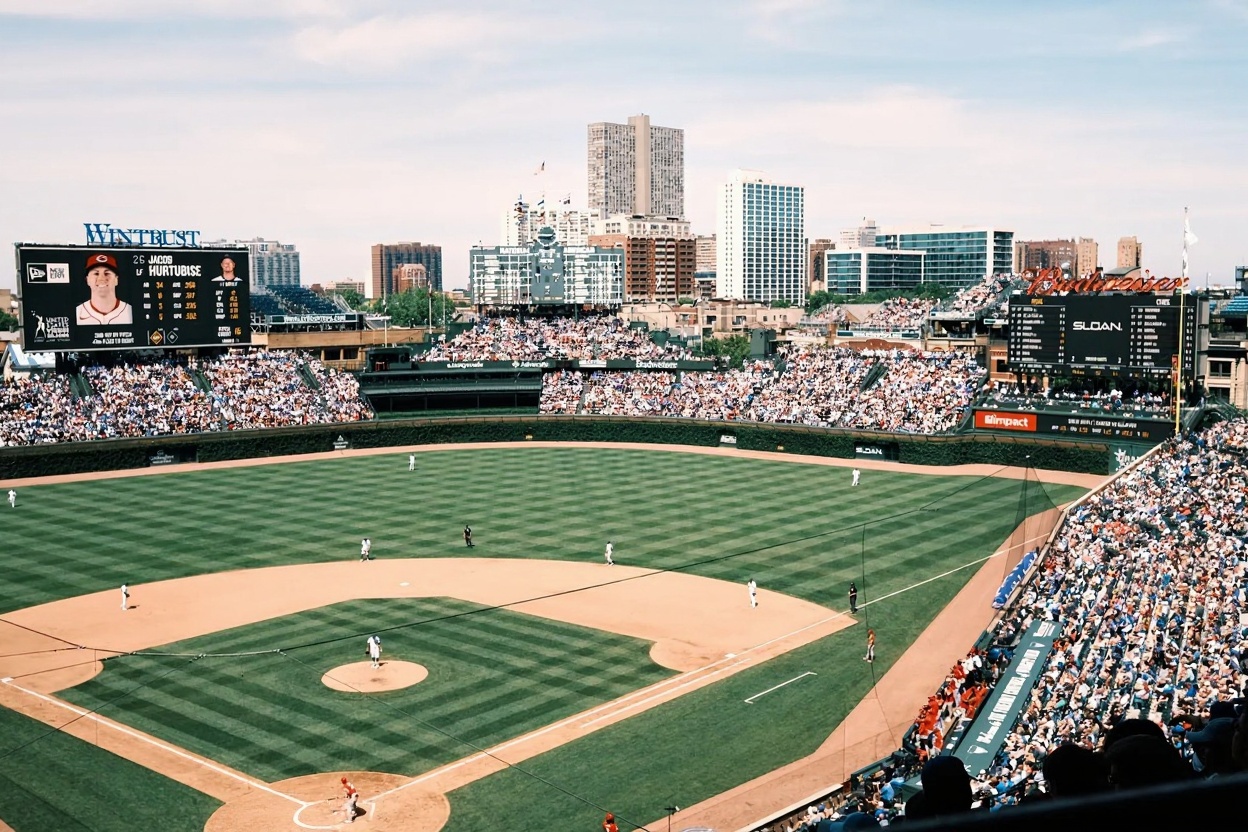
The ivy on the outfield brick wall was planted in 1937. It’s real ivy, it grows every summer, and the outfield bricks behind it are a genuine hazard when the ball bounces off them — outfielders play the wall differently here than anywhere else. The ivy is one of the most photographed features in baseball. It earns it.
The Cubs famously went 108 years without a World Series championship — 1908 to 2016 — which generated an entire mythology of lovable failure and long-suffering fandom. In 2016 they won. The celebration in Wrigleyville was the largest public gathering in Chicago history. People were on the street until 4am. I was one of them, standing on Sheffield Avenue when the final out happened. It’s the reason I still go to games even when the Cubs are having a rough season.
One detail that surprises people who’ve never been: the scoreboard at Wrigley Field is hand-operated. Someone climbs into the scoreboard manually and hangs the numbers during the game. It’s been done this way since 1937 and it’s still done this way now. There’s no electronic display behind the outfield — just a green steel board with painted white numbers and a person inside changing them between half-innings. During day games you can watch the numbers appear and realize someone physically carried them up there. This is a small thing that matters a lot when you’re sitting in the bleachers with the scoreboard directly in front of you.
Getting to Wrigleyville: The Red Line
Take the Red Line to Addison. The station exits directly onto Clark Street, one block from Wrigley Field’s main entrance. From the Loop, this is 20 minutes on the L and costs $2.50. From Wicker Park or Logan Square (Blue Line), transfer at O’Hare/Clark and take the Red Line north — about 30 minutes total.
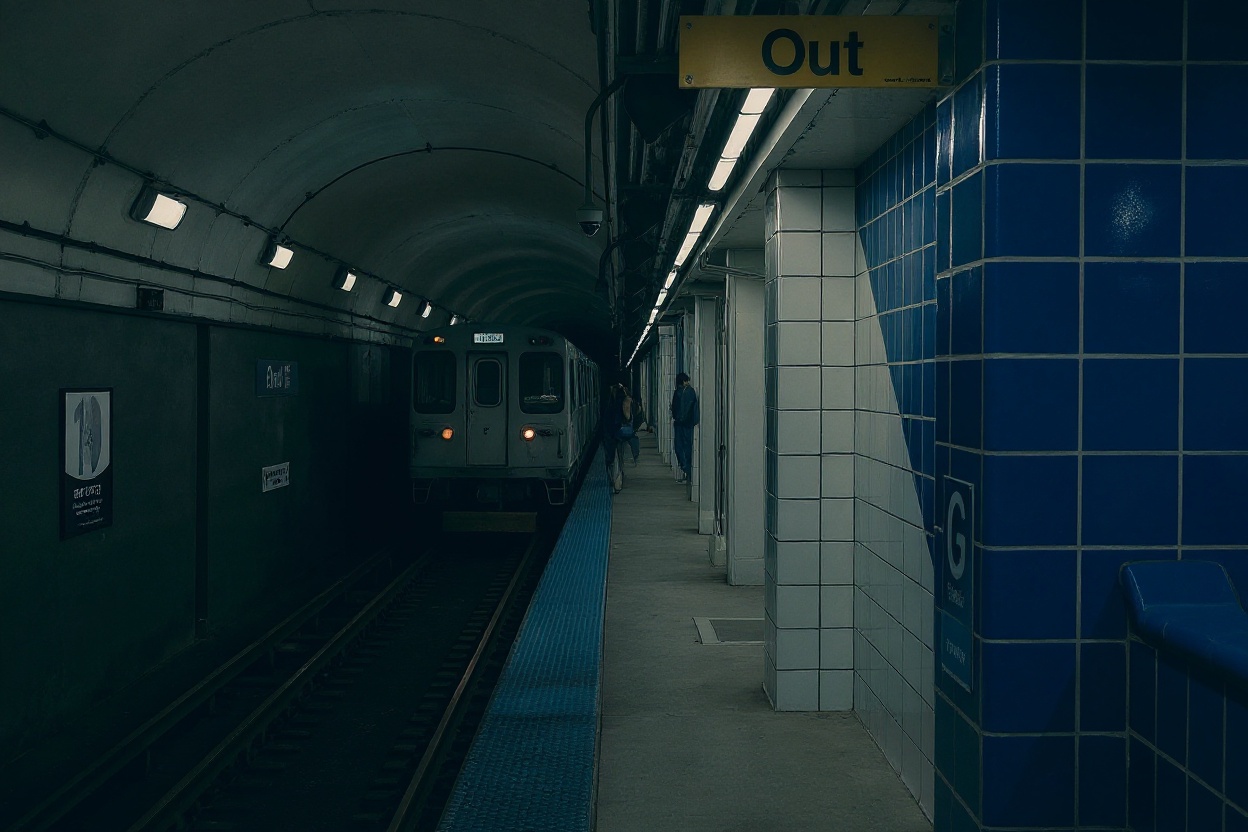
DO NOT drive to Wrigleyville on game day. The neighborhood has implemented a permit parking program that means most street parking within a 6-block radius is residents-only on game days. The pay lots charge $30–50 on game days. There is no version of this where driving makes sense. The Red Line is 20 minutes. Take the Red Line.
For non-game-day visits (stadium tours, rooftop bars, neighborhood restaurants), parking is somewhat more available but still limited and still metered. Even then, the Red Line is the correct answer.
Going to a Cubs Game: How to Do It
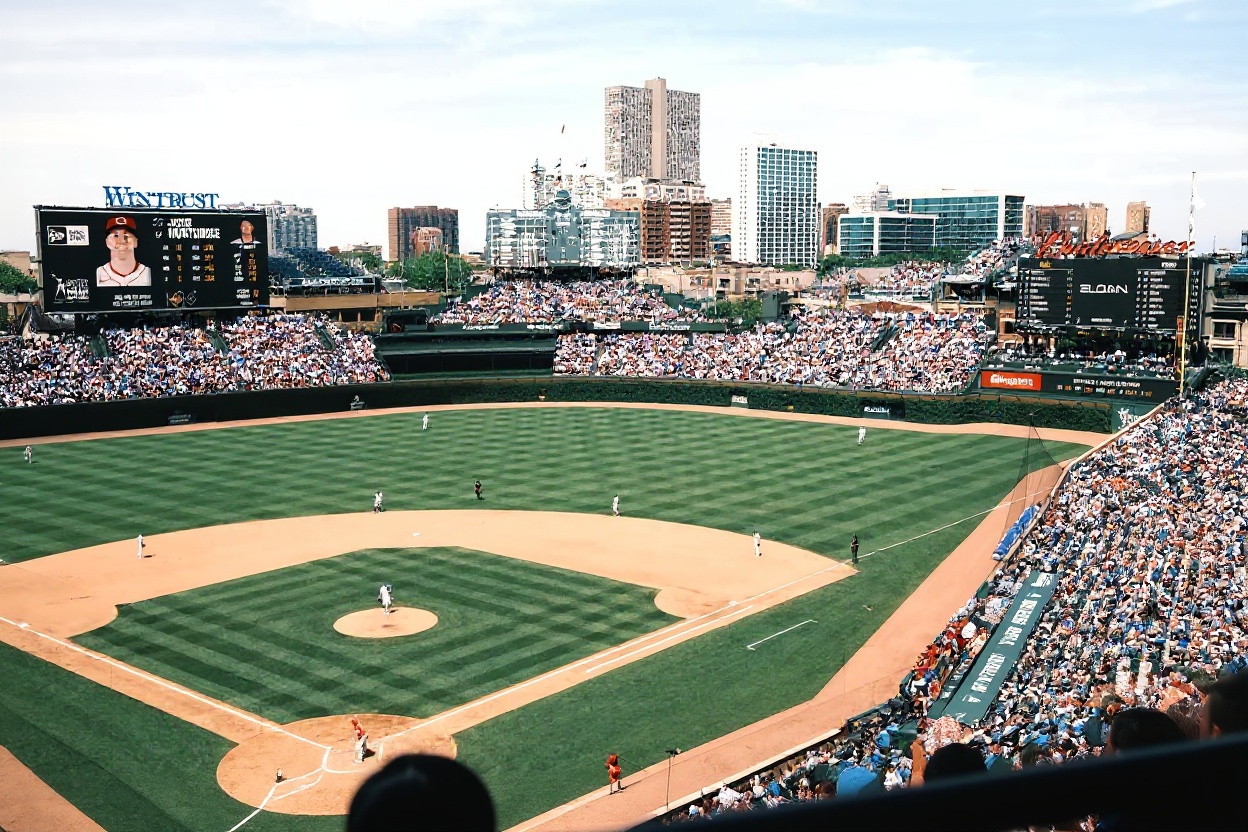
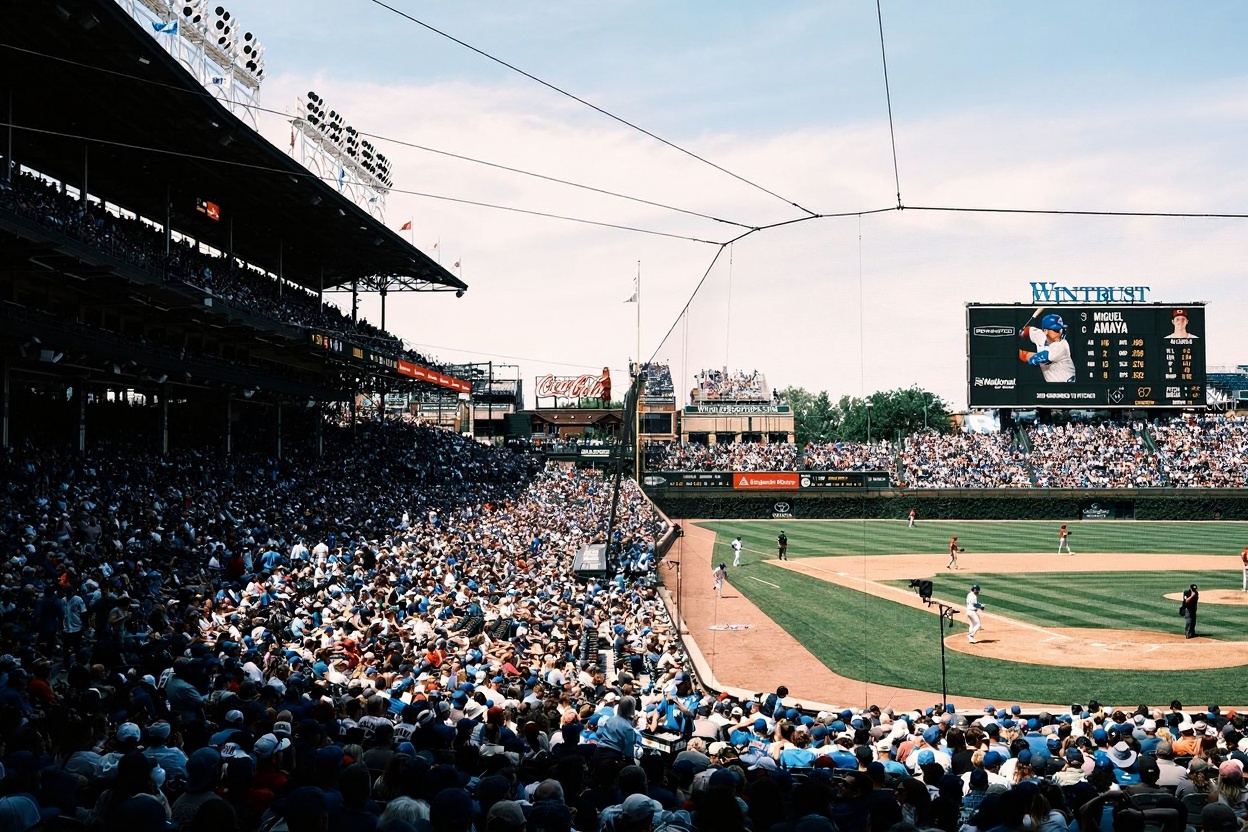
Cubs games at Wrigley Field are one of the better live sports experiences in the country — the stadium is intimate by MLB standards (capacity 41,649), the sightlines are excellent from almost every seat, and the crowd energy on a summer afternoon game is a specific Chicago feeling.
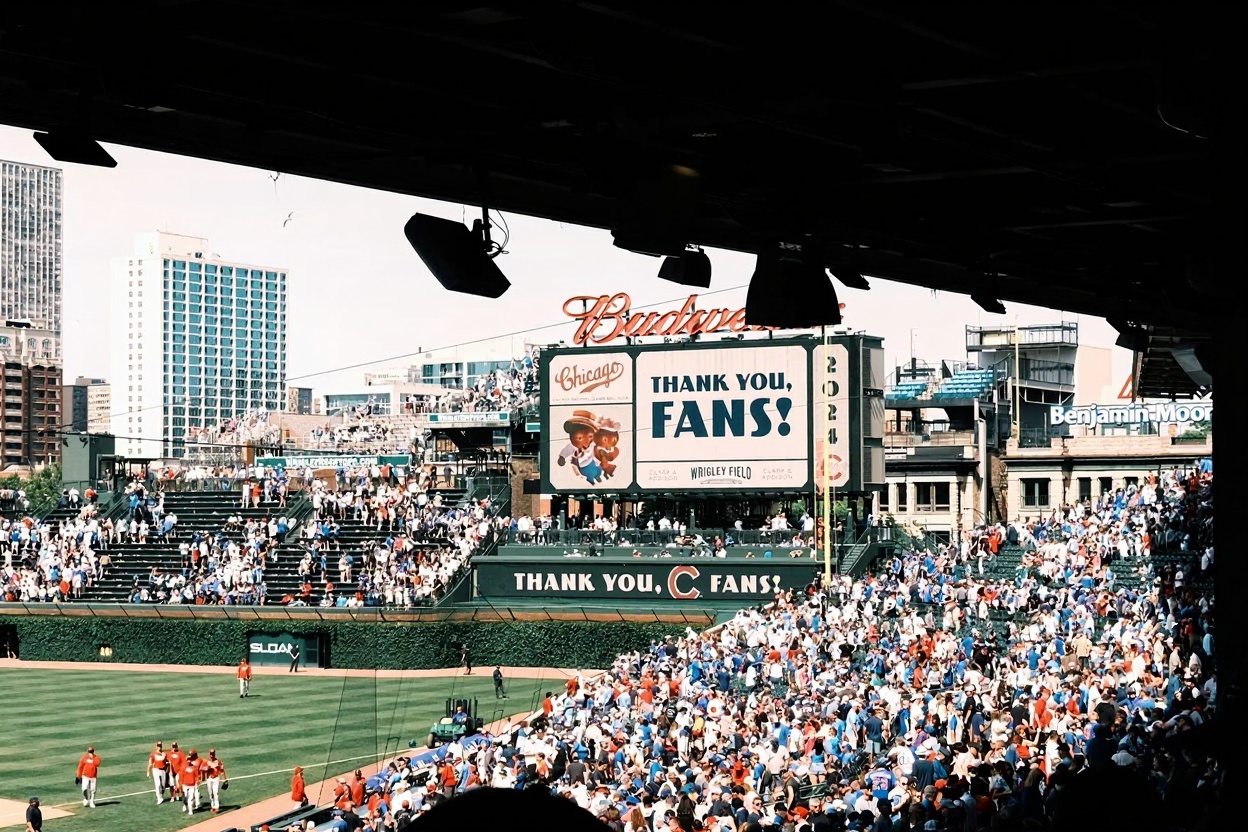
Tickets: available at mlb.com/cubs or StubHub. Lower box and terrace box seats (the sections behind the bases): $50–120. Bleacher seats (the outfield sections behind the ivy): $30–60. Bleachers are the best experience per dollar — the standing section, the most passionate crowd, and the best view of the ivy. Upper deck: $20–40, perfectly good sightlines in a small stadium.
Day games versus night games: Wrigley had no lights until 1988 (the Cubs resisted for decades due to neighborhood opposition). Day games are still the more traditional Wrigley experience — early afternoon sun, the game finishing around 4pm, and the entire post-game bar run happening during daylight. If you’re visiting Chicago for a Cubs game specifically and have schedule flexibility, book a 1:20pm day game.
RYAN’S PICK: Bleacher seats, day game, bring sunscreen. Section 303 (left field bleachers) is slightly less packed than the right field side and still has the ivy wall directly in front of you. Arrive 30 minutes before first pitch for batting practice — watching Cubs hitters hit fly balls into the ivy is better than it sounds. Sunscreen. I cannot stress this enough.
| Wrigleyville Quick Facts | |
|---|---|
| Getting there | Red Line to Addison — 20 min from the Loop, $2.50 |
| Cubs tickets | $20–120 depending on section and game importance |
| Stadium tours | $25–30 — book at mlb.com/cubs/ballpark/tours |
| Wrigley rooftops | $80–175 per game — private rooftop clubs on Sheffield/Waveland |
| Best game day arrival | 45–60 min before first pitch for the full experience |
| Best bars | Murphy’s Bleachers, Wrigleyville Bar, The Cubby Bear — real ones |
| Neighborhood without a game | Pleasant, walkable, Red Line the same, much quieter |
| Parking on game day | $30–50 in lots + resident-permit streets. Don’t drive. |
Wrigley Field Stadium Tours
The Cubs run guided stadium tours on non-game days and some limited game-day options. Cost: $25–30 per person. Book at mlb.com/cubs/ballpark/tours. The tour covers the field level (you stand on the warning track near the ivy), the visitors’ clubhouse, the press box, and the historic photo archive of Cubs history. Duration: about 75 minutes.
The ivy is the thing people photograph. From the warning track level, the outfield wall of green ivy rising above you is the Wrigley Field image most people have in their heads, and seeing it in person — the scale, the actual texture of the brick and vine — is worth the tour cost even if you’re not a baseball fan. The historic significance of the place is communicated better from the field than from the stands.
If you’re visiting Chicago and can’t catch a game, a stadium tour is the correct alternative. If you can catch a game, the game beats the tour. Both options are available during the April–October MLB season.
The Wrigley Rooftops
The apartment buildings on Sheffield Avenue and Waveland Avenue directly across from Wrigley Field’s outfield have had spectators watching games from their rooftops since the 1980s. After a long legal and commercial negotiation, the buildings now operate as official rooftop clubs — you pay for a rooftop seat, get food and drink included, and watch the game from above the outfield wall.
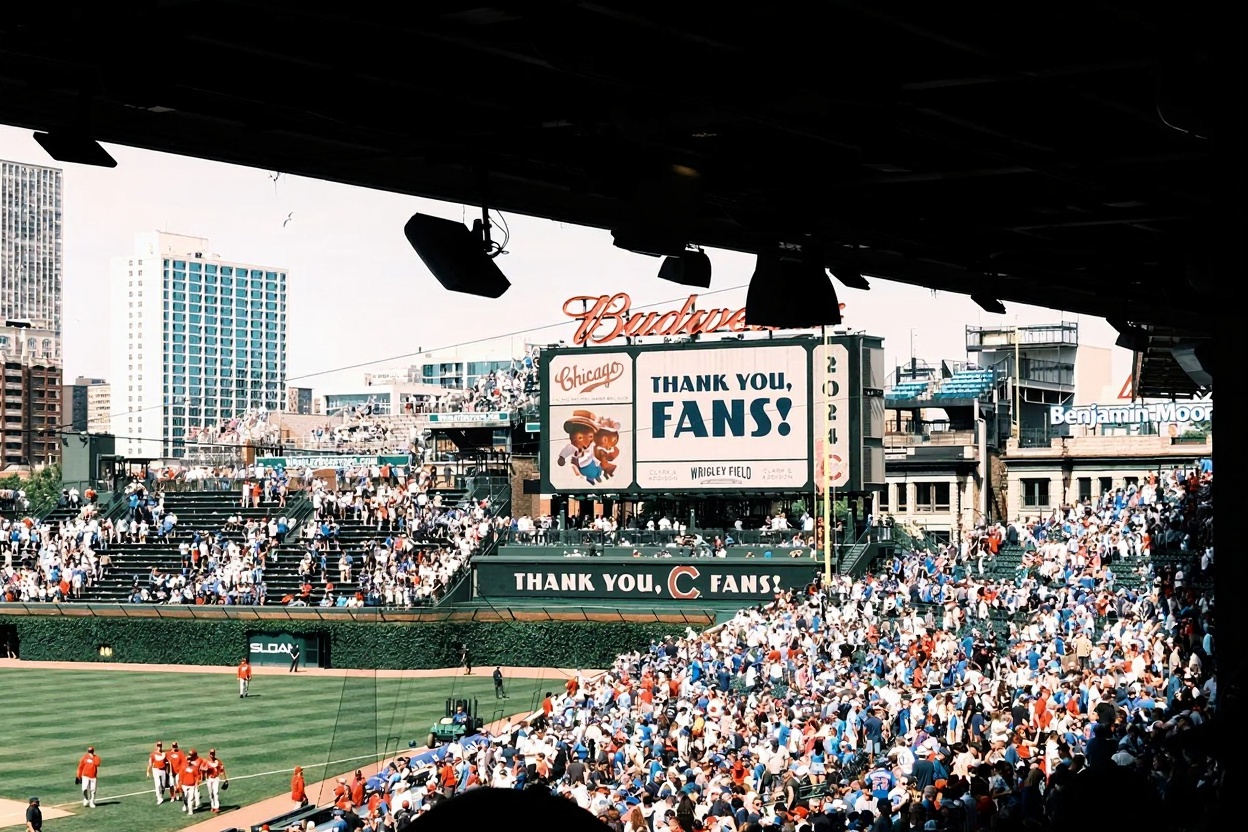
The experience: you’re not in the stadium, you’re 200 feet from the outfield wall, elevated above it. The views of the game are genuinely good (better than some bleacher seats). The food and drink included justify some of the price. Cost: $80–175 per person depending on building, game importance, and seat. Game-day walk-up availability exists but selling out happens on Cubs–Cardinals or playoff-contention games.
Honest take: the rooftops are a better food-and-drink experience than being inside the stadium, and the sightlines are unique. They’re the right call if you want a social event more than an immersive baseball experience, or if you’re bringing people who aren’t baseball fans but want to be near the game.
Wrigleyville Bars: The Honest List
Murphy’s Bleachers — 3655 N Sheffield, directly across from the bleacher entrance. The original Wrigleyville bar (opened 1930s, rebuilt after a fire), cash-based, no nonsense, packed on game days, the place where serious Cubs fans drink before games. Beer is $6–8. There’s a beer garden with picnic tables. This is the correct pre-game bar.
The Cubby Bear — across from the main Addison Street entrance, live music venue that also operates as a game-day bar. Bigger, louder, and more tourist-facing than Murphy’s, but the size means you can actually get a drink without a 15-minute wait. Good for first-timers.
Sluggers — 3540 N Clark, has batting cages upstairs open year-round. Four stories of bar space with rooftop seating and multiple screens. Works as a post-game spot when everything else is maxed out. The batting cages are $1.50 for 20 pitches — a specific kind of entertainment that works at 9pm after three beers.
The bars to skip: Most of the sports bars on Clark Street north of Wrigley are identical variations of the same formula — overpriced drinks, big screens, tourists, and staff who are visibly counting down to 2am. They’re fine in the sense that all bars are fine in some absolute sense. They’re not the reason to be in Wrigleyville. Murphy’s is.
What to Eat Near Wrigley Field
The food around Wrigley Field on game day skews toward exactly what you’d expect — hot dogs, burgers, pizza slices from walk-up windows. Most of it is fine and some of it is better than fine. Here’s what I actually recommend:
Smoke Daddy — 3435 N Clark. Barbecue and live blues, open daily. The brisket sandwich and the pulled pork are both genuinely good by Chicago barbecue standards, which is not a low bar. Good for a pre-game meal that isn’t bar food. About $15–22 per person. Closes earlier than the bars, so get there before 9pm on game nights.
Inside the stadium food: Wrigley Field has upgraded its concessions significantly over the past decade. The Chicago hot dog (Vienna Beef, yellow mustard, relish, tomato, sport peppers, celery salt — no ketchup, ever) is the correct order. If you want something more substantial, the Shake Shack stand inside Wrigley has a shorter line than most people expect given the brand. Hot dogs are $7–8, burgers $12–15.
Rick’s Café Américain (the bar, not the Casablanca reference) and the other Clark Street spots are acceptable for post-game food if you’re hungry and don’t want to travel. Don’t expect a destination dining experience — these places are built for volume, not craft. Use them accordingly.
The honest recommendation: eat before the game at a real restaurant (Smoke Daddy, or Ann Sather for brunch games), grab a hot dog inside during the game, and leave the post-game bar food decisions to your future self.
Wrigleyville by Season
The Cubs season runs April through October, which covers a significant range of Chicago weather conditions. What you’re walking into changes by month:
April–May: Cold. Seriously cold by baseball standards — 40s–50s°F at first pitch, windy off the lake. Bring a jacket you’d wear to an actual outdoor event. The bleachers get direct sun from the south and warm up by the third or fourth inning. These are the lowest-crowd games (fewer tourists, smaller demand for tickets, cheaper StubHub prices). The ivy is not yet green in April — it’s bare branches on brown vines, which is a specific aesthetic that some people find more interesting than the summer version.
June–August: Prime Wrigleyville season. Afternoon games in the 70s–80s, the ivy fully green, the bleachers packed, the post-game bar scene at full intensity. This is when tickets are most expensive and the neighborhood is most alive. Hydrate. The bleachers in direct July sun are warmer than they look from the street.
September–October: The best month for a Cubs game if the team is in playoff contention, the second-best month otherwise. Temperatures in the 60s–70s, smaller crowds than August, and the ivy starting to turn yellow-orange at the edges by late October. October night games require a real jacket. Playoff games at Wrigley — when they happen — are the loudest, most intense, most memorable event the neighborhood produces.
Wrigleyville Beyond Game Day
The neighborhood without a game is a pleasant, walkable North Side area with good coffee, some decent restaurants, and the benefit of significantly less noise. A few things worth knowing:
Ann Sather — 3411 N Broadway (a block south of Wrigley). Swedish diner open since 1945. The cinnamon rolls are the thing people drive across Chicago for. Weekend brunch wait: 20–40 minutes. On weekdays, walk right in. $12–18 for a full brunch. This is not a game-day restaurant — it’s a neighborhood institution that exists independently of the Cubs.
Goose Island Wrigleyville — 3535 N Clark. The Chicago craft beer pioneer’s taproom near Wrigley, with the full lineup of Goose Island beers on draft. Good for an afternoon beer on a non-game day when the bar scene is not operating at game-day intensity. The IPA and the Bourbon County Stout (when available) are the ones to order.
The Addison Red Line station murals: The Addison station has CTA-commissioned murals depicting Cubs history and Chicago baseball culture. Worth looking at properly rather than rushing through on the way to the game. The mosaic work is specific to the Cubs iconography — the ivy, the scoreboard, the Wrigley Field brick — and it’s better than most transit art.
The Lake View neighborhood: Wrigleyville sits inside the broader Lake View neighborhood, which extends east toward the lakefront and south into Boystown. If you’re staying in the area without a game, walking east on Addison or Belmont brings you to Lincoln Park and the lakefront trail within 15 minutes. The lakefront path runs 18 miles along Lake Michigan — free, open year-round, and the most useful free thing in Chicago. From Wrigleyville, the nearest access point is Montrose Beach (10 blocks north) or Belmont Harbor (8 blocks east).
The Mistake Ryan Made at Wrigley
First Cubs game I ever took out-of-town friends to — three people visiting from New York, none of them baseball fans, all of them willing to try. I bought tickets online two days before for a Friday night Cubs–Cardinals game, which is the most important regular-season game in the NL Central and one of the best rivalries in baseball.
What I didn’t think through: a Cubs–Cardinals Friday night game in July is not a game you casually attend. The stadium was packed to capacity. The Cubs were losing by the seventh inning. The post-game crowd on Clark Street was impenetrable. The Red Line back had a 30-minute wait on the platform.
The friends had a fine time overall but the three-hour post-game journey home was not what I’d implicitly promised. The lesson: Cubs–Cardinals, Cubs–White Sox, and any playoff-contention game are different logistical animals than a Tuesday afternoon Cubs–Marlins. If you’re bringing people who aren’t Cubs fans, pick a day game against a mid-table team in a non-playoff month. The baseball is the same, the logistics are significantly more manageable, and the ivy looks identical regardless of who’s pitching.
- How do I get tickets to a Cubs game at Wrigley Field?
- Official tickets at mlb.com/cubs — prices start around $20 for upper deck and go to $120+ for lower box. StubHub and Vivid Seats have resale tickets for all games. Buy at least a week ahead for weekend games and any Cubs–Cardinals or Cubs–Sox matchup. Day-of walk-up at the box office exists for less popular weekday games but the selection is limited.
- Is Wrigley Field worth visiting without a Cubs game?
- Yes — the stadium tour ($25–30, book ahead) covers the field level, the ivy wall, and the press box. The tour is available on most non-game days during April–October. If you can choose between a tour and a game, go to the game. If you can’t catch a game, the tour is a solid alternative that covers the historic and physical reality of the ballpark.
- What’s the best area to sit at Wrigley Field?
- Bleacher seats for the ivy-wall experience and the most energetic crowd ($30–60). Lower box for the best game view ($80–120). Upper deck for the best value ($20–40) with still-good sightlines in a compact stadium. Avoid obstructed view seats (pillars exist in some older sections) — check the seat view preview on the MLB app before buying.
- Is Wrigleyville safe?
- Yes — Wrigleyville is a safe North Side neighborhood. On game days the area around the stadium has extremely high crowd density, which means standard crowd-sense applies (watch bags, be aware of pickpockets in packed bars). The Red Line back to downtown runs frequently and is safe. The neighborhood well away from game-day crowd events is a normal residential area.
- What are the Wrigley rooftops and are they worth it?
- The Wrigley rooftops are privately-operated viewing clubs on the Sheffield and Waveland buildings directly across from the outfield. Admission ($80–175) includes food and open bar. The sightlines are genuinely good — you see the game from above the outfield wall. Worth it for a social event with non-baseball-fans who want the atmosphere without an immersive stadium experience. Not worth it over bleacher seats if you actually want to watch baseball.
Where to Eat Before and After a Cubs Game
The food situation around Wrigley Field is better than game-day chaos makes it look, if you know where to go and when to arrive.
Before the game (ideally 90 minutes pre-first pitch):
Murphy’s Bleachers (3655 N Sheffield) handles pre-game drinking. For food specifically, the right move is Ann Sather if you’re doing a day game — the 3411 N Broadway location opens at 7am and you can be done with breakfast by 10am, well before a 1:20pm first pitch. The cinnamon rolls are the correct choice. Budget $12–18 per person.
Smoke Daddy (3435 N Clark) does barbecue before the game at a reasonable pace — the brisket sandwich ($16–18) is the order. Arrive by 11am for a day game or 4pm for a 7:05pm night game. The restaurant fills by game-approach time and waits become inconvenient when you have a ticket in your pocket.
Inside Wrigley: The Chicago hot dog ($7–8 at the concession stands) is mandatory. Vienna Beef, poppyseed bun, yellow mustard, neon relish, tomato, pickle, sport peppers, celery salt. No ketchup. I cannot make this point emphatically enough. Order the hot dog in the second inning when the concession lines have cleared from the first inning rush. The Shake Shack stand inside Wrigley (Section 107) has a shorter line than most people expect and does a legitimately good burger ($12–15) if you want something more substantial.
After the game: The post-game logistics on Clark and Sheffield are crowded for 45 minutes after the final out. Two strategies:
Strategy 1: Leave one inning early (eighth, if the outcome seems settled), beat the crowd to the Red Line, and eat dinner somewhere that isn’t dealing with 40,000 people trying to leave simultaneously. The Lakeview and Uptown neighborhoods north of Wrigleyville have good options 10–15 minutes on the Red Line from Addison.
Strategy 2: Stay for the full game, accept the crowd, and go to Sluggers (3540 N Clark) which has enough floors and enough space to absorb some of the post-game volume. Eat the bar food, play the batting cages, wait until the street crowd thins — usually about 45–60 minutes after the final out.
What to avoid: the restaurants on Clark Street proper between Addison and Belmont on a weekend game day. They exist to serve the game-day crowd at game-day pricing and game-day service speeds. They’re not bad restaurants — they’re restaurants optimized for 2,000 people all wanting food at the same time. The food quality isn’t the problem. The experience of eating in that context is.
Wrigleyville earns its reputation — the combination of a 1914 brick stadium, ivy on the outfield wall, and a century of Cubs fandom is a genuine thing that exists in Chicago and nowhere else. Go to a day game. Sit in the bleachers. Drink a beer at Murphy’s before the game. Leave by the eighth inning if the Cubs are losing badly — the Red Line is better empty than packed. Questions in the comments, I check them. Go see the ivy.