Last updated: June 2026 — restaurants, hours, and transit verified June 2026.
Pilsen is a Mexican-American neighborhood on Chicago’s Lower West Side, about 2 miles southwest of the Loop. It’s known for a dense concentration of murals on the 18th Street viaducts and side streets, the National Museum of Mexican Art (free admission), and some of the most consistent Mexican food in the city. Take the Pink Line to 18th Street. Budget two hours minimum, longer if you’re eating lunch.
Most visitors spend two days on the Magnificent Mile and leave thinking that’s Chicago. The Magnificent Mile is fine. It is not Chicago.
Pilsen is closer to Chicago. Not the whole picture — no single neighborhood is — but it’s the version that visitors keep thinking about six months after they leave. The murals. The carnitas. The fact that a Czech opera house built in 1892 now hosts indie bands three nights a week. That’s a city with layers.
I’ve lived nine years in this city. Here’s what to actually do in Pilsen.
What Pilsen Actually Is
The neighborhood is named after a city in the Czech Republic. That’s because Czech and Bohemian immigrants settled here in the 19th century — hence Thalia Hall, the Czech opera house, still standing at the corner of 18th and Allport. The Czechs left in the mid-20th century as the neighborhood’s demographics shifted. Mexican and Mexican-American families moved in from the 1950s onwards.
Pilsen is now the largest Mexican-American neighborhood in Chicago, and one of the most significant in the Midwest. The community has shaped the neighborhood’s character — the food, the murals, the Dia de los Muertos celebrations in November — while also navigating the gentrification pressure that’s been pushing in from Wicker Park and the West Loop for the past decade.
That tension is worth knowing about before you arrive. Pilsen’s mural district draws visitors. Visitors drew coffee shops and galleries. Coffee shops and galleries drew rent increases. The conversations in the neighborhood about who the city is actually for are real, and ongoing. You can engage with a neighborhood thoughtfully and still have a good time in it — but going in aware is better than going in oblivious.
⚠Real Talk
Pilsen is a real neighborhood with real residents, not a curated tourist experience. The 18th Street corridor is visitor-friendly. The blocks away from it are residential. Treat it like you’d treat any Chicago neighborhood — respectful of the space, not acting like it’s an Instagram set.
The Pilsen Murals: What to See and Where
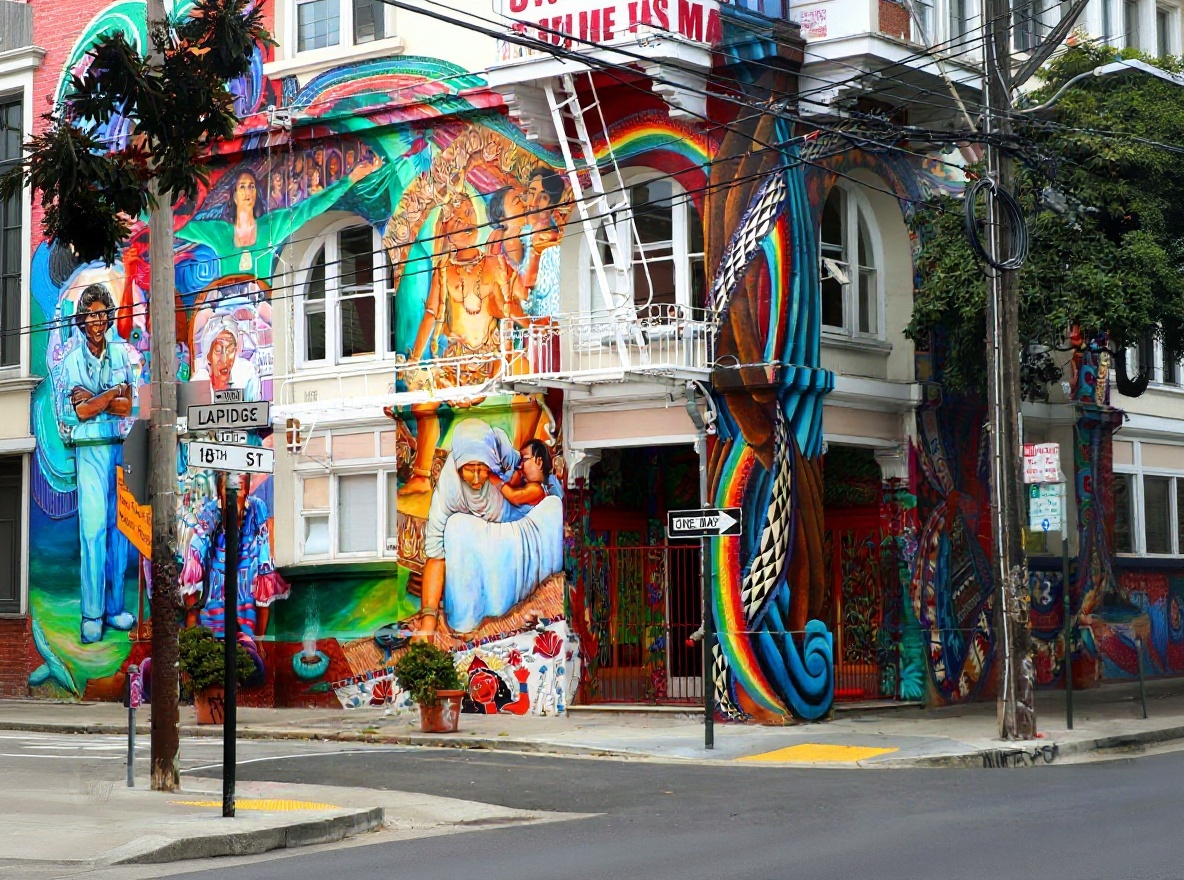
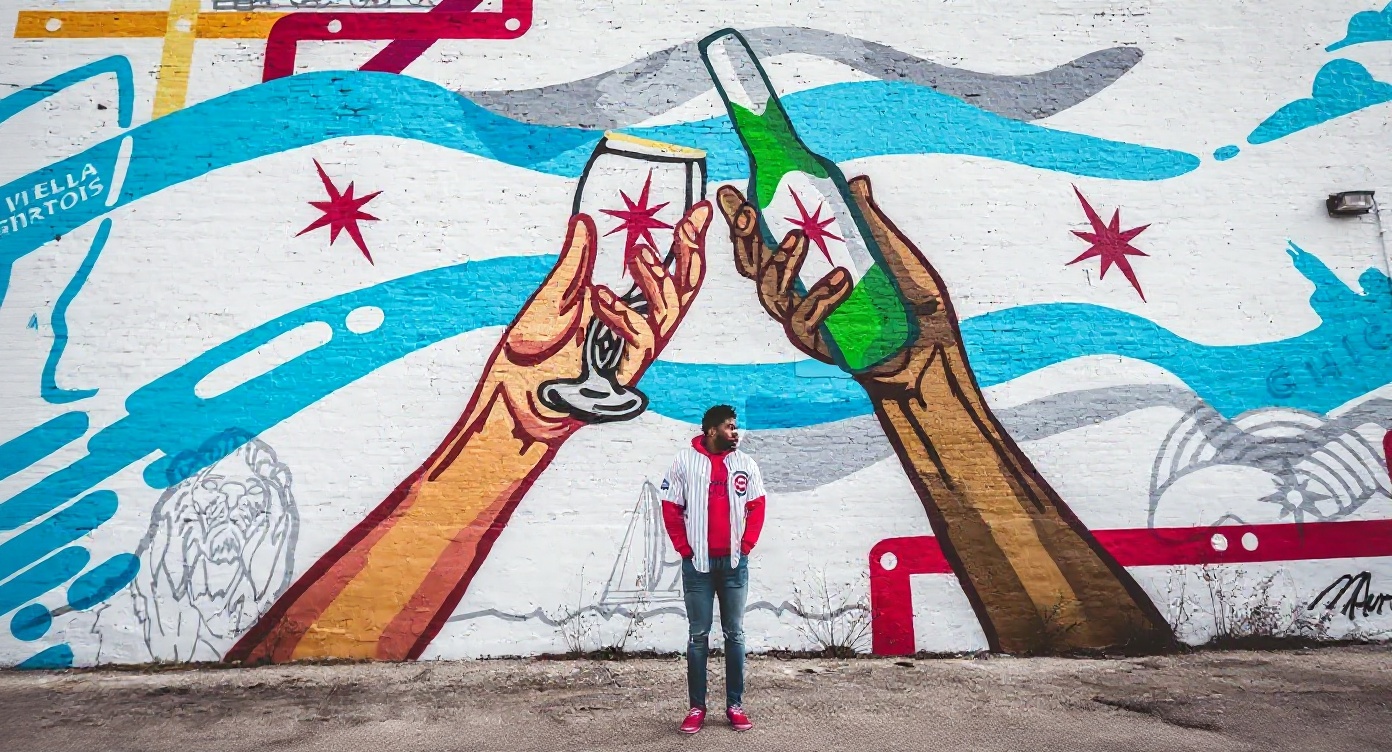
The mural scene is the main reason most people come to Pilsen, and it delivers. There are over 30 large-scale murals concentrated along the Pink Line viaducts on 18th Street and the surrounding side streets, most of them commissioned from local and national artists over the past 20 years.
The best stretch: walk west from the 18th Street Pink Line station along 18th Street toward Halsted. The viaduct walls on both sides of the track have large murals — portraits, historical scenes, political work. The quality is variable, which is fine. That’s what a neighborhood mural scene looks like rather than a curated gallery.
Throop Street between 18th and 21st Street has some of the more striking individual works — including a massive mural of Frida Kahlo that’s become the neighborhood’s most-photographed wall. It’s at approximately 1900 S Throop. Don’t try to pin down the exact address; just walk south on Throop from 18th and you’ll find it within a block.
The CTA viaduct on 21st Street has a continuous mural installation running the full block length. Less photographed than the main 18th Street walls, more interesting to look at. Get there before 10am for the best light.
Ryan’s honest take: the murals are worth an hour of your morning. They’re not the Sistine Chapel. They’re a living document of a neighborhood’s culture and politics over 20 years, painted on concrete and updated when the paint fades. That’s more interesting than anything hanging in a gallery on Michigan Avenue.
National Museum of Mexican Art: Go Before Lunch
At 1852 W 19th Street, 3 blocks from the Pink Line stop, is one of the best museums in Chicago that most Chicagoans have never been to. Free admission. Has been since it opened in 1987. The collection spans pre-Columbian artefacts through contemporary Mexican and Chicano art — about 10,000 works in total.
The Dia de los Muertos installation is the most-visited exhibit, but the contemporary gallery is what I keep coming back to. The museum does a consistently good job of showing Mexican and Chicano artists whose work doesn’t typically appear in the mainstream Chicago arts circuit.
Practically: it opens at 10am, Tuesday through Sunday. Budget 60-90 minutes. There’s no café inside — have coffee first on 18th Street. The gift shop has good prints and some books worth buying.
My confession: I recommended the museum to three separate groups of friends over two years without mentioning it’s closed on Mondays. Two of them showed up on a Monday. The National Museum of Mexican Art website has current hours — check it before you go. I should have said that from the start.
•RYAN’S PICK
Go to the museum first thing in the morning — it opens at 10am — and you’ll have the main galleries almost to yourself. The textile collection is the part most people skip and the part I keep returning to. Take 20 minutes for it. Then walk north on Throop to the murals on your way back to 18th Street.
The Pilsen Gallery Scene
Pilsen has a real gallery scene that predates its current reputation. Artists moved into the neighborhood’s industrial buildings in the 1990s — cheap studio space, good light, 20 minutes from downtown. Some stayed. The galleries that emerged around them are worth knowing about even if you’re not buying anything.
Zhou B Art Center — 1029 W 35th Street. The largest gallery space in Pilsen — a former industrial building with studio and exhibition space across multiple floors. Zhou B hosts rotating shows with a heavy emphasis on Chinese-American artists alongside broader contemporary programming. They have free opening receptions most months. Check their calendar before you go; it’s one of the best free evening events in the neighborhood and nobody from outside Pilsen seems to know it exists.
Mana Contemporary Chicago — 2233 S Throop Street. A massive arts complex — converted industrial buildings totaling over a million square feet — that operates as artist studios, art storage for major collections, and exhibition space. They hold regular public shows and artist open studio events. Not a walk-in gallery in the traditional sense, but their website lists public programs. Worth knowing about if contemporary art is your thing.
S Halsted gallery corridor. Several smaller galleries cluster on and around S Halsted between 18th and 21st Street. The density has thinned over the past decade as rents increased, but a Saturday morning walk still turns up two or three open spaces worth stepping into. Most are free. Most don’t have obvious signage — look for propped-open doors.
Where to Eat in Pilsen
The food is the best reason to come to Pilsen. Here’s what to actually order.
Carnitas Uruapan — 1725 W 18th Street. Been here since 1975. They do one thing: carnitas. Braised pork, pulled, served with tortillas, salsa, and whatever toppings you want. The line moves fast. The carnitas are excellent. Two important notes: cash only (there is an ATM about half a block away, but it has a $3.50 fee and sometimes runs out of cash on busy weekends — bring $20 in cash and skip the ATM). Closed on Mondays and Tuesdays. A full order for two people costs about $18-22. Worth every cent.
La Catrina Cafe — 1011 W 18th Street. Mexican coffee shop, murals on the walls, strong espresso, tamales and pastries in the case. Opens at 7am on weekends. This is where I go when I’m in the neighborhood for a morning walk and need coffee before doing anything else. The café de olla — traditional Mexican coffee brewed with cinnamon and piloncillo — is $4 and better than anything at the chain coffee shop down the street.
Dusek’s Board and Beer — 1227 W 18th Street. Inside Thalia Hall, the 1892 Czech opera house. Gastropub menu with a strong beer list and a kitchen that takes the food seriously — the pork schnitzel has been on the menu for years for a reason. Prices run $16-26 for mains. Good for a sit-down lunch or pre-show dinner. Make a reservation if you’re going on a weekend evening.
Nuevo León — 1515 W 18th Street. Old-school Mexican diner, been operating since 1962. The kind of place where the menus are laminated and the portions are enormous. Breakfast is the move: huevos rancheros, chilaquiles, or the simple eggs-and-beans plate. Everything under $14. Cash preferred but cards accepted.
Bars and Nightlife in Pilsen
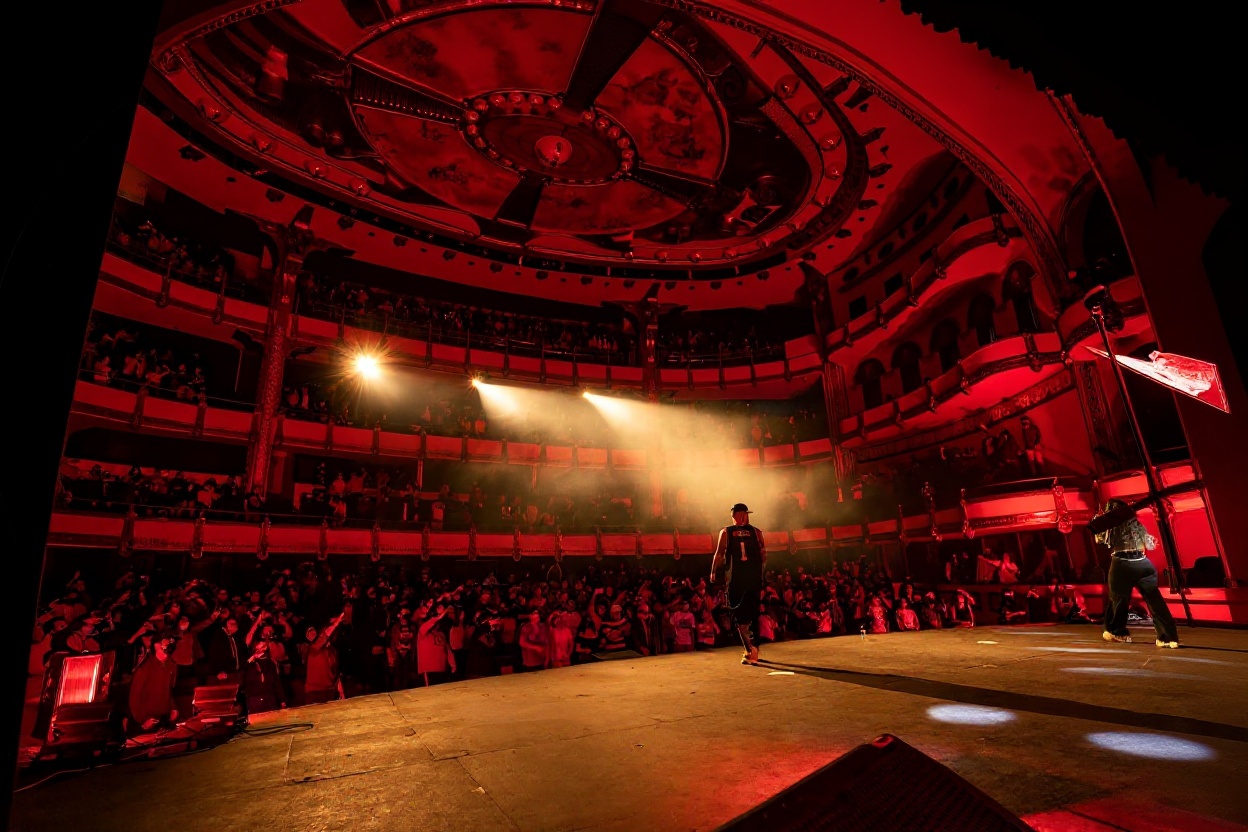
Thalia Hall — 1807 W Allport Street. The headline venue. A Czech opera house built in 1892 that’s now one of the best mid-size music venues in Chicago — capacity around 1,400, sight lines are good from most spots, the sound system is better than you’d expect from a 130-year-old building. Shows run Tuesday through Saturday most weeks. Tickets $20-45 depending on the artist. Check the calendar at thaliahallchicago.com. The Dusek’s bar downstairs is open even on non-show nights.
Lagunitas Brewing Company Taproom — 2607 W 17th Street. The Chicago brewery of the California craft beer operation. Large taproom, always pours 20+ beers, food available, and on Friday evenings they do free live music in the dog-friendly outdoor area. It’s not the city’s most interesting beer venue — Lagunitas is a big brand — but the space is good and the prices are fair ($7-9 per pint). Good for a late afternoon stop before dinner on 18th Street.
Simone’s — 960 W 18th Street. Neighborhood bar built almost entirely from reclaimed and recycled materials. The bar itself is made from a cut-down train car. The drinks are straightforward (cocktails $12-15, beers $6-8), the crowd is mixed neighborhood-and-newcomer, and the vibe is exactly right for a Tuesday evening when you don’t want to commit to anything more structured. They have a small food menu.
Skylark — 2149 S Halsted Street. Proper dive bar. Cheap beer, pool table, jukebox, zero pretension. A $20 bill covers a full evening if you’re drinking PBR. The kitchen does burgers until late. I’ve been going here for six years. The bar hasn’t changed. This is the correct situation.
Getting to Pilsen from Downtown Chicago
Take the Pink Line to 18th Street. That’s it.
From the Loop (Clark/Lake, State/Lake, or any Loop station), the Pink Line runs southwest. 18th Street is about 6 stops from the Loop — roughly 15 minutes. Trains run every 8-10 minutes on weekdays, every 12 minutes on weekends. The fare is $2.50 with a Ventra card.
The 18th Street stop drops you directly onto 18th Street, 2 blocks east of the main commercial strip. Walk west. You’ll see the murals on the viaduct immediately.
By car: parking exists in Pilsen, unlike Wicker Park or the West Loop. Street parking on side streets off 18th is usually available before noon on weekdays and before 10am on weekends. Don’t park on 18th Street itself — street cleaning runs Tuesday and Thursday mornings on alternating sides, and Chicago parking enforcement is not forgiving.
Rideshare: fine, but the Pink Line is faster and half the cost. A Lyft from the Loop to 18th Street runs $12-18 depending on surge. The L is $2.50.
Pilsen fits naturally into a west-side Chicago day alongside Wicker Park (Blue Line, 20 minutes north) and Logan Square (Blue Line, 25 minutes north). If you’re building a neighborhood day, my suggested order: Pilsen in the morning for murals and museum, Logan Square for lunch at one of the newer restaurants on Milwaukee Avenue, and Wicker Park for the afternoon walk and evening drinks. For the full neighborhood breakdown, the Chicago neighborhoods guide has the logic for which to prioritize based on your interests.
When to Go to Pilsen
Saturday morning, 9am-1pm. This is the optimal Pilsen window. The museum opens at 10, Carnitas Uruapan is open and the line isn’t yet an hour long, the light on the murals is good from the east, and the neighborhood is at its most alive without being crowded.
The Dia de los Muertos celebration in early November is the other peak moment. The National Museum of Mexican Art does a major installation, the street festival on 18th Street runs the first weekend of November, and the whole neighborhood is decorated with altars and marigolds. It’s one of the best free events in Chicago. Dress warm — it’s November in Chicago, which means 35-45°F and usually a wind off the lake.
Avoid: Sunday afternoons in summer (crowded, street parking impossible, Carnitas line wraps around the block). Monday (museum closed, Carnitas Uruapan closed). January through February (the murals are still there, but standing outside looking at them in 15°F wind is less enjoyable than it sounds).
For a broader Chicago seasonal picture — when to visit the city overall, what’s happening month by month — the Chicago best time to visit guide covers the full year.
Pilsen vs. Wicker Park vs. Logan Square: Which One?
You’ve got an afternoon. Which neighborhood do you do?
Do Pilsen if: you want Mexican food, murals, a free museum, and a neighborhood with genuine cultural depth. Pilsen has the strongest sense of place of the three. It requires a little more transit intentionality (the Pink Line is less frequented than the Blue Line) but rewards the effort.
Do Wicker Park if: you want vintage shops, a dense bar scene, and the classic young-Chicago energy. More commercial than it was 10 years ago, still fun, and the Wicker Park guide covers what’s worth your time there.
Do Logan Square if: you want the best brunch restaurants in the city, the best coffee, and a farmers market on Sundays. The Logan Square guide has all of it.
The honest answer: if you have time for one, do Pilsen. It’s the neighborhood that most resembles the Chicago that people who live here actually care about.
- How do I get to Pilsen Chicago?
- Take the Pink Line to 18th Street — about 15 minutes from the Loop, $2.50 with a Ventra card. Trains run every 8-10 minutes on weekdays. Walk west from the stop and you’ll see the murals on the viaduct immediately. Rideshare works but costs $12-18 from downtown. Take the train.
- Is Pilsen Chicago safe?
- Yes, during the day and early evening on 18th Street and the main mural corridor. Pilsen, like most Chicago neighborhoods, has blocks that are busier and blocks that are quieter. Stick to 18th Street and the area around the museum during your visit and you’ll be fine. Standard city awareness applies — don’t wander down random side streets late at night.
- What is Pilsen Chicago known for?
- Three things: murals (30+ large-scale works along the Pink Line viaducts and surrounding streets), the National Museum of Mexican Art (free admission, 1852 W 19th Street), and Mexican food — specifically the carnitas at Carnitas Uruapan (1725 W 18th Street, cash only). It’s also home to Thalia Hall, one of Chicago’s best mid-size music venues.
- What is the best food in Pilsen Chicago?
- Carnitas Uruapan for carnitas — been open since 1975, cash only, closed Monday and Tuesday. Nuevo León for old-school Mexican diner breakfast. La Catrina Cafe for café de olla (cinnamon-spiced Mexican coffee). Dusek’s at Thalia Hall for a sit-down dinner. Budget $18-25 per person for a proper lunch, less if you’re eating tacos on the street.
- How long do you need in Pilsen Chicago?
- Two hours covers murals and the National Museum of Mexican Art. Add 90 minutes for lunch at Carnitas Uruapan or Nuevo León. A half day (4-5 hours) lets you do all of the above plus an afternoon drink at Simone’s or Lagunitas. Evening show at Thalia Hall extends it to a full day. Two hours minimum is the floor.
- When is Dia de los Muertos in Pilsen?
- The street festival and museum installation happen the first weekend of November. The National Museum of Mexican Art does a major Dia de los Muertos exhibit that usually runs October through early November. The outdoor celebration is free. Dress for Chicago in November — 35-45°F, wind. It’s one of the best free events in the city.
The Short Version on Pilsen
Pink Line to 18th Street. Walk the murals. Go to the free museum. Eat carnitas at Uruapan (bring cash). If it’s evening, Thalia Hall or Simone’s depending on your energy level.
Pilsen is the neighborhood that out-of-towners ask about after they leave. Not because it’s the flashiest part of Chicago — it’s not. But it’s the part of Chicago where the city is still visibly itself: a Mexican-American neighborhood with 50 years of community, a mural scene with 30 years of accumulated work, and a music venue built in 1892 that’s figured out how to stay relevant. That combination is rarer than it sounds.
Questions in the comments — I check them most days. If you’re building out a full Chicago itinerary, the Chicago things to do guide has the city-wide picture. Pilsen is in there, alongside the architecture boat tour and the Riverwalk, which are the two other things I’d prioritize for a first visit.
Pilsen: The Seasonal Picture
Pilsen works differently by season than most Chicago neighborhoods, and the experience you have in June versus October is meaningfully different.
Spring (April–May): The murals come back to life as winter light gives way to spring. April and May are good months for the mural walk because the light is softer and the neighborhood is less crowded than summer. The Conservatory-adjacent experience: the plants outside Carnitas Uruapan’s courtyard are starting to show, and the side streets off 18th have the specific visual quality of a neighborhood warming up. Hotel rates across Chicago are lower in spring — worth combining a Pilsen visit with the general spring Chicago timing.
Summer (June–August): Pilsen Fest runs in late summer — check the exact dates annually, usually late August. The festival takes over the neighborhood around 18th and Blue Island, live music, food vendors, neighborhood community focus rather than tourist marketing. It’s one of the better neighborhood festivals in Chicago that doesn’t appear in standard tourist guides. The murals are at their most colorful in summer light, though mid-day direct sun washes out some of the more detailed work. Best mural photography: early morning or evening when the light is oblique.
Fall (September–October): The Dia de los Muertos season starts building in October. The National Museum of Mexican Art installs its annual Dia de los Muertos exhibition in October, running into early November. This is the moment in Pilsen’s calendar that most justifies a specific trip — the installation is consistently the best museum exhibition of the fall season in Chicago, free admission, and the neighborhood decorations starting to appear on the storefronts and windows of 18th Street make the walk to and from the museum genuinely beautiful.
Winter (November–March): Cold, quieter, but not closed. Carnitas Uruapan still operates (check their days — Monday and Tuesday remain closed year-round). The museum is heated and worth the trip specifically in winter when you want indoor cultural activity without the crowds. Thalia Hall has its most consistent programming in winter when the live music scene moves fully indoors. Skylark on Halsted is a warm dive bar that improves in inverse proportion to the outside temperature.
The Pilsen Restaurant Scene Beyond the Main Names
The guide covers the essential stops — Carnitas Uruapan, La Catrina, Dusek’s, Nuevo León — but Pilsen’s food scene has additional spots worth knowing about as the neighborhood has developed.
Han 202 (605 W 31st St) — technically in the adjacent Bridgeport neighborhood but frequented by Pilsen visitors. Contemporary Asian-American tasting menu, BYOB, genuinely excellent. The prix fixe runs around $45–55 per person without drinks. This is the restaurant that proves Pilsen and the surrounding neighborhoods have a serious food scene beyond Mexican food — not a replacement for Carnitas Uruapan, but a different kind of excellent.
Taquería Los Comales (1544 W 18th St) — a longtime neighborhood spot that does tacos at the price point you expect from Pilsen: $3–4 each, cash preferred, no Instagram-optimized presentation. The al pastor is the correct order. Open late on weekends, which makes it the right answer after a Thalia Hall show when you want food and not a restaurant experience.
Kristoffer’s Café and Bakery (1733 S Halsted St) — a Mexican bakery that produces pan dulce in the morning and serves coffee and light food throughout the day. Cash preferred. The conchas (sweet rolls with a sugar topping) are what to order. $2–3 each. Go in the morning before 10am when they’re fresh from the oven.
El Milagro Tortilleria (3048 W 26th St, slightly south of the main 18th Street corridor) — the industrial tortilla operation that sells fresh tortillas from a shop at the front. This requires a small detour from the main 18th Street strip, but buying a stack of fresh tortillas and watching them come off the line is the kind of specific Chicago food experience that doesn’t appear in most guides. About $2–4 for a pound of tortillas. They’ll stay good for two days if you’re continuing your trip.