Lincoln Park Chicago: What’s Actually Worth Your Time (From Someone Who Lives Here)
Updated June 2026 — Ryan Kowalski has lived in Chicago for 9 years and writes about the city the way only residents can. Prices verified June 2026.

Lincoln Park is a North Side neighborhood with a free zoo, 1,200 acres of lakefront park, one of Chicago’s best deep dish pizzas, and a farmers market that’s genuinely worth planning a Saturday around. Take the Red Line to Fullerton. Don’t drive. The parking situation is a problem I’ve watched people solve wrong hundreds of times.
Lincoln Park: The Neighborhood vs. The Park (They’re Different Things)
Here’s the confusion that trips up most visitors: Lincoln Park is both the name of a Chicago neighborhood and the name of the 1,200-acre park running along the lakefront through it. They overlap but they’re not the same thing.
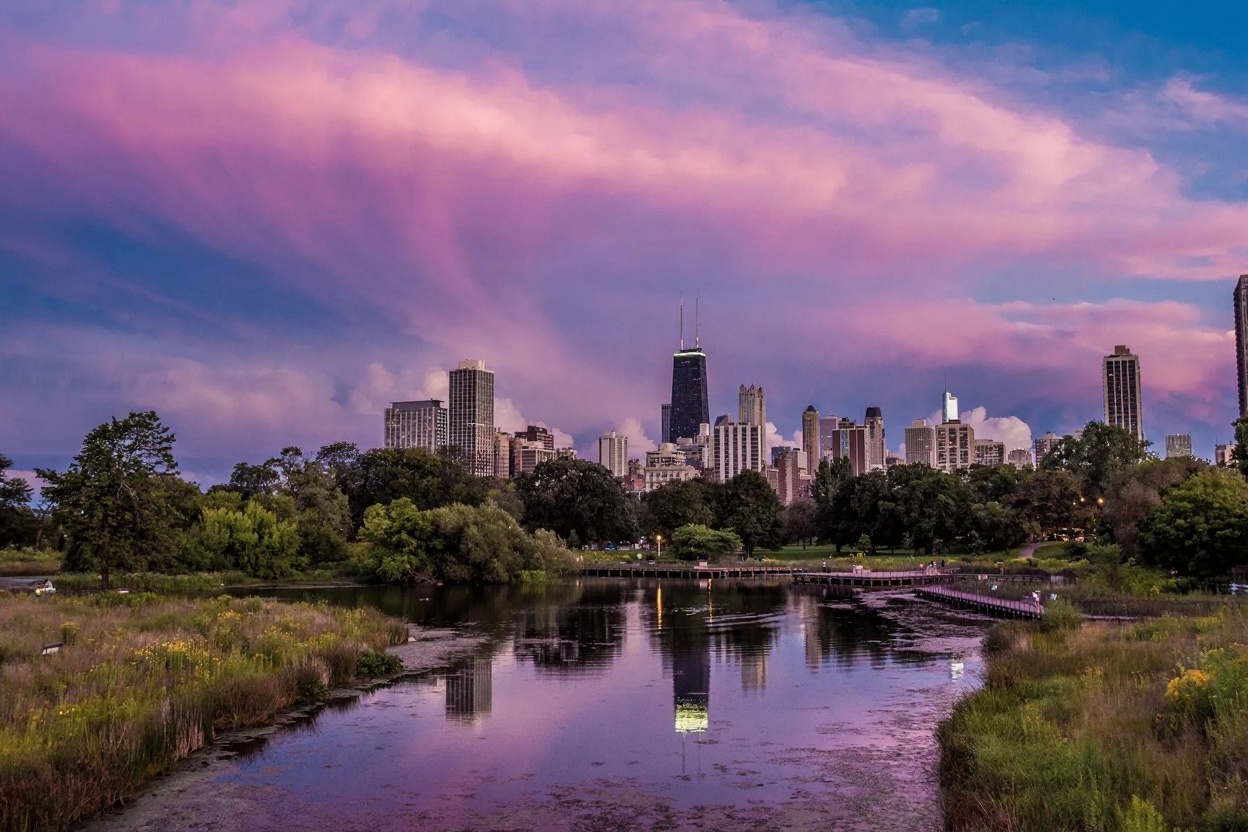
The neighborhood is roughly bounded by Armitage Avenue to the south, Diversey Parkway to the north, Lake Michigan to the east, and Racine Avenue to the west. It’s one of Chicago’s most expensive zip codes — the residential streets between Halsted and Clark have the kind of renovated Victorian brownstones that go for $1.8 million. It’s a neighborhood, and it’s fine. The park is why you come.
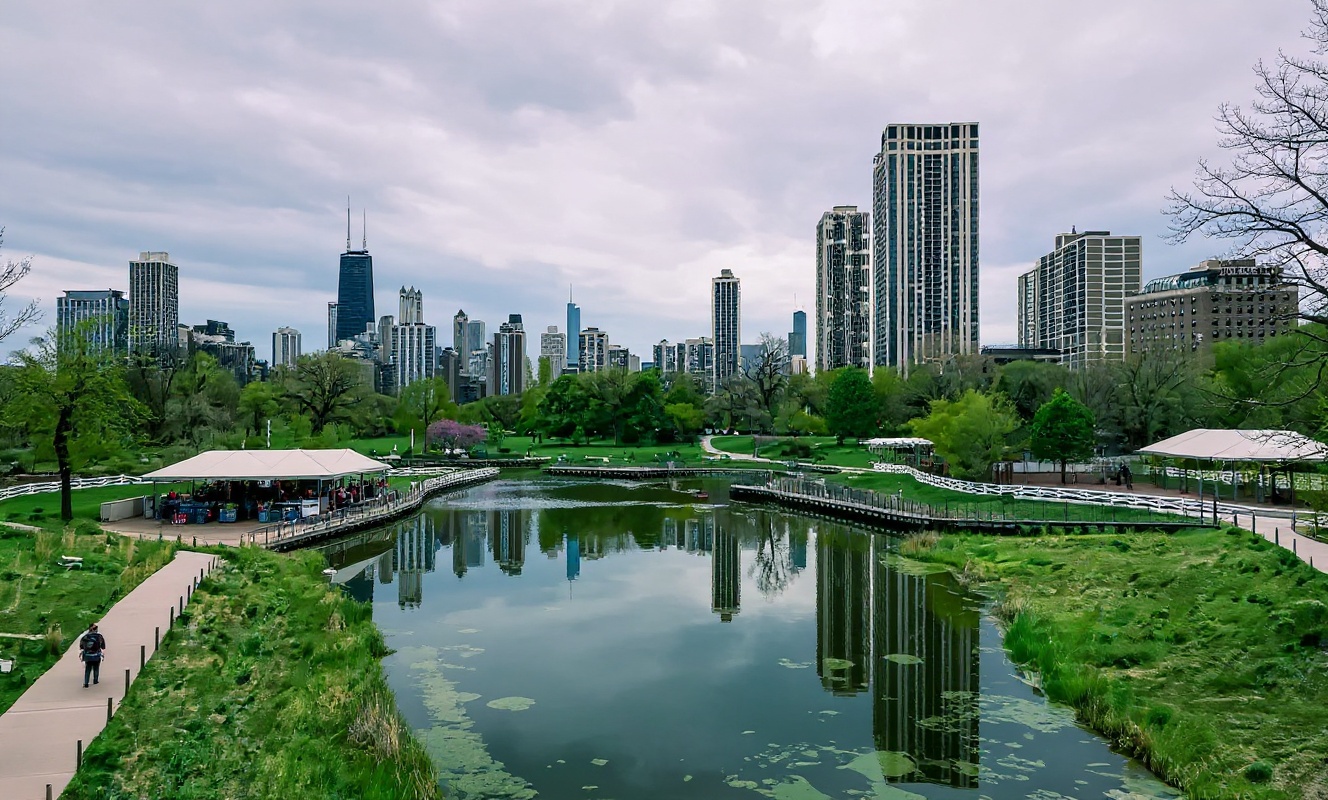
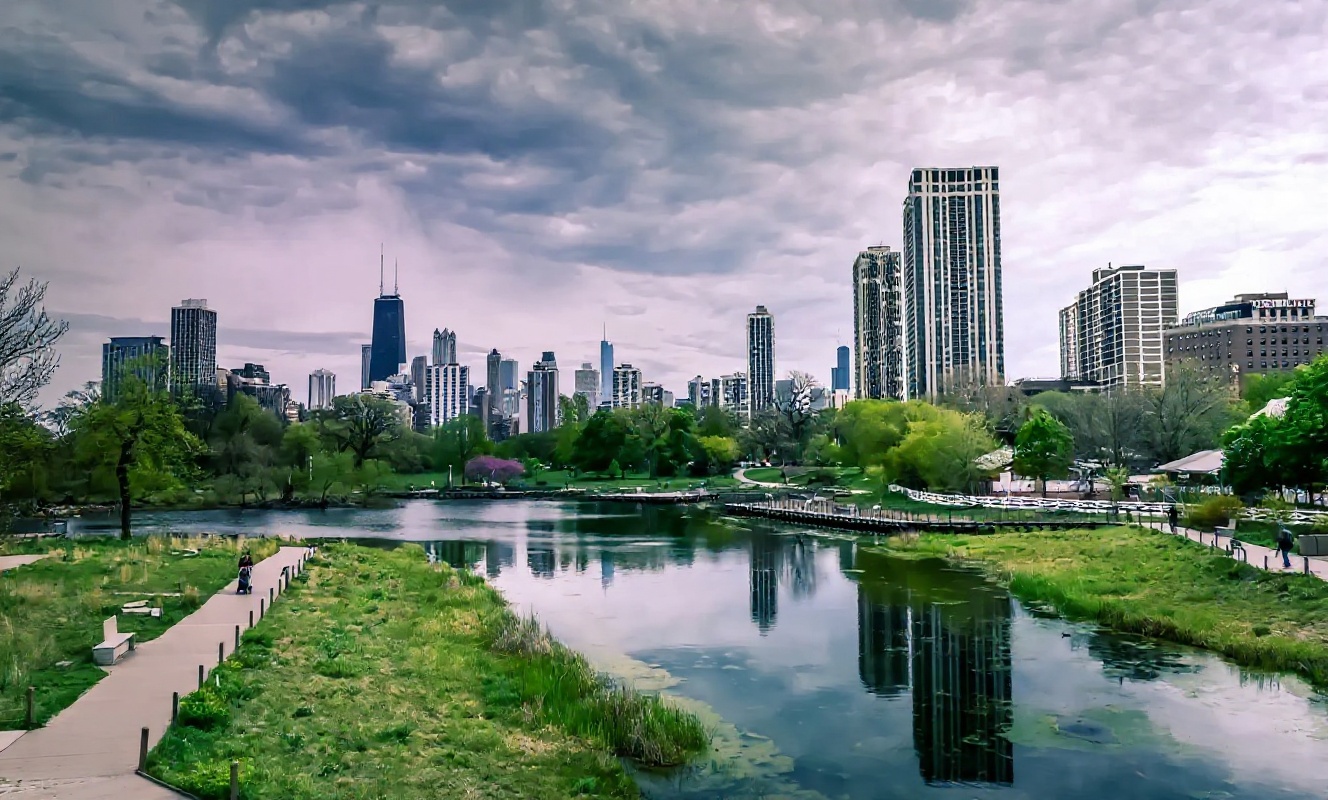
The park itself stretches along the lakefront from North Avenue Beach up to Montrose. It has the zoo, the conservatory, a golf course, a nature museum, a yacht club, running and cycling paths, and several miles of lakefront with views of the Chicago skyline across the water. It’s publicly funded and, with the exception of a few ticketed attractions, entirely free. In a city that often charges for its best things, this is notable.
The quick distinction: if someone tells you they “live in Lincoln Park,” they mean the expensive brownstone neighborhood west of the park. If someone tells you they’re “going to Lincoln Park,” they usually mean the park and zoo on the lakefront. Both are worth your time. The park more than the residential streets, unless Pequod’s is the goal (Pequod’s is always the goal).
One detail worth knowing: Oz Park is a small neighborhood park at Webster and Larrabee, about a 10-minute walk from the zoo, with statues of Wizard of Oz characters — Dorothy, the Tin Man, the Scarecrow, the Cowardly Lion. It exists because L. Frank Baum, who wrote the Oz books, lived in Chicago in the 1890s. The park is a local thing, not a tourist destination, but it’s pleasant and usually quiet and the Tin Man statue is genuinely well-made.
Lincoln Park Zoo: The Free Zoo on the Lakefront
Lincoln Park Zoo is free. Open 365 days a year, including Christmas and Thanksgiving. No tickets. No advance registration. You walk in. This is increasingly unusual — the San Diego Zoo is $72/person, the Brookfield Zoo outside Chicago is $30 — and it’s the reason the Lincoln Park Zoo gets 3.5 million visitors a year.
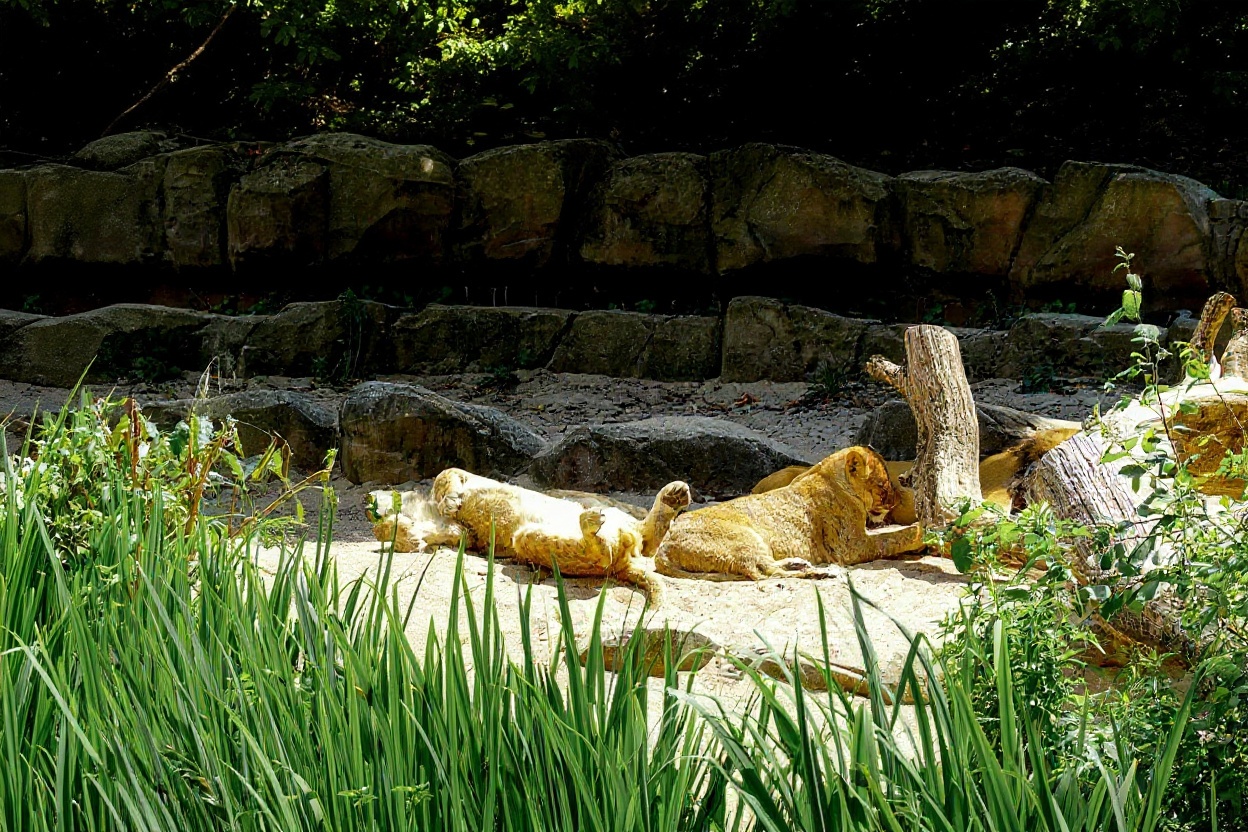
The zoo covers 35 acres and has around 200 species. The highlights for a first visit:
Kovler Lion House (1912) — one of the oldest surviving zoo buildings in the US, restored in 2014. The lions are typically active in the morning before 10am. By noon in summer, they’re horizontal.
Regenstein African Journey — the indoor habitat has African wild dogs, pygmy hippos, and dwarf crocodiles, all in a climate-controlled building that’s excellent in January and genuinely good year-round. The pygmy hippos are the thing that makes adults forget their reservations about zoos.
Farm-in-the-Zoo — free, separate building at the south end of the zoo, aimed at kids but genuinely interesting for adults who’ve never been close to a draft horse. Open daily, demonstration schedule posted at the entrance.
Penguin and Seabird House — the penguins are fed at 10am and 3pm daily. Get there 10 minutes early. The afternoon feeding is less crowded.
| Lincoln Park Zoo Quick Facts | |
|---|---|
| Admission | FREE — open 365 days/year |
| Hours (summer) | 7am–6pm weekdays / 7am–7pm weekends |
| Penguin feeding | 10am and 3pm daily — arrive 10 min early |
| Parking | $20–35 on weekdays / $35–45 weekends — take the Red Line instead |
| Red Line stop | Fullerton — 15-minute walk east through the neighborhood |
| Best time to visit | Weekday mornings in May/June or September |
| Zoo Lights (holiday) | Late November–early January — ticketed event at night, worth checking dates |
RYAN’S HONEST TAKE: The zoo is worth 2–3 hours on a weekday morning. On a Saturday in July, it’s 2–3 hours plus an hour of crowd management. July weekends: get there by 8:30am or go to the Conservatory and come back to the zoo after 3pm when families with young kids start leaving. The Conservatory is usually empty regardless of when you go.
Lincoln Park Conservatory: The Quiet One
The Lincoln Park Conservatory sits adjacent to the zoo and is free, same rules — no ticket, walk in. It’s four Victorian-era greenhouses built in 1895 and maintained by the Chicago Park District: a Fern Room, a Palm House, an Orchid House, and a Show House that changes with seasons.
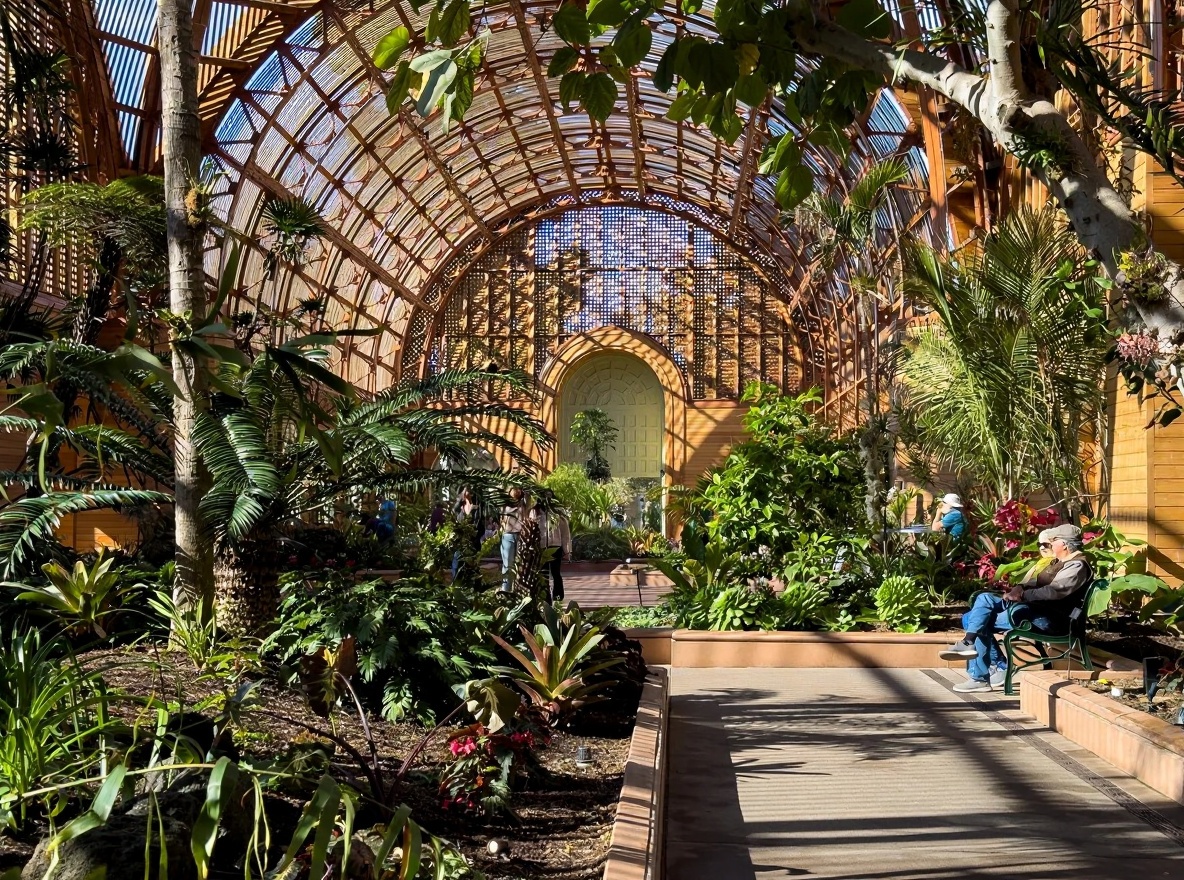
The Fern Room is the one to see. Fifteen-foot tree ferns and ancient cycads, heated to tropical temperature, with a humidity that makes November feel like a different planet. Chicagoans use it as a mental health resource in February. You’re welcome to do the same.
The Conservatory is almost always uncrowded — even on a Saturday in July when the zoo is packed, you can walk through the greenhouses in relative quiet. It takes about 45 minutes at a leisurely pace. It’s the highest enjoyment-per-minute ratio in Lincoln Park, and essentially no one talks about it as a destination in its own right.
North Avenue Beach: The Lakefront Option
North Avenue Beach is at the south end of the Lincoln Park, between the zoo and the Lake Shore Drive bridge. It’s a sand beach (Chicago’s lakefront beaches are sand, not pebble — worth noting if you’ve visited Lake Michigan elsewhere), about 1,200 feet long, with a distinctive Art Deco beach house that looks like a ship run aground.

The beach house has a rooftop bar open May through September. The bar is crowded on weekends and the drinks are not cheap ($14–18 for a cocktail, $9–12 for a beer) but the view is the Chicago skyline directly to the south across the water, which is one of the better views in the city that doesn’t require going up the Willis Tower.
Lake Michigan swimming: the water temperature hits 65–70°F (18–21°C) by late June, peaks around 72–75°F (22–24°C) in August, and drops back by October. It’s cold by most ocean standards. Chicagoans do not acknowledge this as a reason to hesitate.
The beach volleyball courts are first-come — typically occupied by 9am on summer weekends. The running path along the lakefront here is part of the 18-mile Lakefront Trail that runs from Ardmore to South Shore. If you’re running in Chicago and want the skyline view, this is the stretch.
Green City Market: Worth a Saturday in Season
The Green City Market runs Wednesdays (7am–1pm) and Saturdays (7am–1pm) from May through October in the south end of Lincoln Park, at the corner of Clark Street and Lincoln Park West. It’s Chicago’s best farmers market — specific and confident statement, I’ll stand by it — and the Saturday morning version is the one worth building a trip around.
The stalls have actual farmers from the midwest region, heritage pork and grass-fed beef operations, small-batch jam and pickle vendors, and a prepared food section that by 9am smells like a collaboration between a wood fire and a fresh bread oven. Budget $30–50 for a Saturday morning of eating and shopping.
The market runs a chef demo series on Saturdays at 10:30am — chefs from Chicago’s better restaurants show up to cook with market produce. Free to watch, standing room around the demo tent. It’s the kind of thing that’s easy to stumble into and genuinely good.
RYAN’S PICK: Get to the Green City Market by 7:30am on Saturday. The croissant vendor — usually set up near the Clark Street entrance — sells out by 9am. The Heritage Prairie Farm pork chop sandwich (around $14) is the meal. Eat it on the park lawn 50 feet from the stand. That is a Saturday in Chicago.
Pequod’s Pizza: The Deep Dish Worth Arguing About
Look. The Chicago deep dish debate is ongoing and I have a position.
Lou Malnati’s is excellent. Giordano’s is fine. Pequod’s is the one that people who know deep dish argue is the best, and they have a specific reason: the caramelized cheese crust. Pequod’s applies cheese along the outer edge of the pan before baking. It caramelizes against the metal during the 45-minute cook. The result is a crust with a layer of slightly crispy, slightly burnt cheese built into it that no other deep dish has.
Pequod’s is at 2207 N Clybourn Avenue, about a 10-minute walk from the Red Line Fullerton stop. It’s not on a main drag — it’s on a side street in a converted building that doesn’t look like much from the outside. Inside: wood paneling, sports memorabilia, booths, and a bar. The deep dish takes 40–45 minutes to cook. They will tell you this when you order. Plan for it.
A small deep dish (feeds 2 people if they’re not starving): $22–28. A medium (feeds 3–4): $30–36. They do thin crust. I’ve never ordered it. I have no opinion.
Cash preferred, though they take cards. Weekend wait times: 30–45 minutes if you show up without a reservation, which you can make online. Make the reservation. I’ve watched first-time visitors wait 90 minutes because they didn’t. The pizza is worth it. The 90-minute wait is avoidable.
The Rest of the Food Scene
R.J. Grunts — 2056 N Lincoln Park West. Opened 1971 by Rich Melman (the Lettuce Entertain You dynasty starts here). Classic American menu: burgers, salads, a salad bar that’s been there since the ’70s. $15–25 per person. Not the most exciting food in Lincoln Park but the Chicago restaurant history attached to it is real.

Boka — 1729 N Halsted. One Michelin star, seasonal American tasting menu, $90–130/person. Worth knowing about. Not where I’d send a first-time Chicago visitor on a 3-day trip — there are better uses of the money for someone building their Chicago food map.
Cafe Ba-Ba-Reeba! — 2024 N Halsted. Spanish tapas, happy hour 4:30–6:30pm (tapas $5–8), sangria that I actively recommend. Good for a group. $30–45 per person with drinks.
Twin Anchors — 1655 N Sedgwick. Old-school rib joint that’s been here since 1954. Frank Sinatra used to come when he was in town (there are photos). The ribs are baby back, sauced, $28–38 for a full rack. Tuesday nights are quieter. Weekends have a wait. Cash only.
Steppenwolf Theatre: The Cultural Reason to Come at Night
Steppenwolf Theatre Company is at 1650 N Halsted, in the heart of the Lincoln Park neighborhood — a 10-minute walk from the Red Line Fullerton stop. It’s one of the most respected regional theaters in the country: John Malkovich, Gary Sinise, and Laurie Metcalf all came out of Steppenwolf before Hollywood got to them, and the company has premiered plays that went on to Broadway and won Pulitzer Prizes.
Tickets run $20–110 depending on seat and show. The $20 rush tickets go on sale day-of at the box office — if you’re flexible on what you see, this is worth knowing about. The Steppenwolf season runs September through June, with some summer programming. The theater has three stages and typically runs multiple productions simultaneously.
If you’re in Lincoln Park for dinner at Pequod’s or Cafe Ba-Ba-Reeba and want the evening version of the neighborhood, Steppenwolf is the option that doesn’t require ending up at a bar at midnight. The neighborhood around Halsted Street has several restaurants that take pre-theater reservations. The box office is reachable at steppenwolf.org.
Getting to Lincoln Park
Take the Red Line. Get off at Fullerton. Walk east 15 minutes and you’re at the zoo entrance. This is the correct answer.
The Brown/Purple Line stops at Armitage and Sedgwick — these put you on the western edge of the neighborhood, closer to Pequod’s than the zoo. If the goal is pizza, Sedgwick is probably the right stop (5-minute walk to Clybourn, then south to Pequod’s). If the goal is the zoo, Red Line Fullerton.
Parking: $20–35 on weekdays, $35–45 on weekends in the pay lots near the zoo. Metered street parking is 2-hour limited in most of the neighborhood and heavily enforced. The math on taking two Ubers versus paying for parking usually favors the L by a significant margin. The Red Line from the Loop to Fullerton is 16 minutes and costs $2.50.
DO NOT plan to drive to Lincoln Park on a Saturday in July and find street parking. I am telling you this as someone who has watched people make this plan and then spend 90 minutes on it. Take the Red Line.
When to Go to Lincoln Park
May–June: The best version of Lincoln Park. The park is green, the Conservatory orchids are in bloom, the Green City Market has just restarted, and it’s not yet August-crowded. Temperature 60–75°F. This is when Chicago actually functions well as a city.
July–August: Hot (80–88°F), North Avenue Beach is at capacity by 11am on weekends, and the zoo has the kind of crowd that involves strollers operating in a competitive framework. Still worth it — just get to everything early. 7:30am zoo visit means you’re done by 10:30am before most people arrive.
September–October: My second preference. The crowds thin, the farmers market is at peak harvest (best tomatoes, best sweet corn), the lake is still warm enough to swim, and the Lincoln Park trees start doing their autumn thing in late October. Genuinely underrated time to visit Chicago generally.
November–March: The zoo is still free and still open. The Conservatory is heated and tropically humid and completely worth it in February specifically. Zoo Lights runs late November through early January — a ticketed evening event with light installations throughout the zoo, $8–19/person. Good if you’re visiting in December.
- Is Lincoln Park Zoo really free?
- Yes, genuinely free. No ticket, no time reservation required. Open 365 days a year including holidays. The only ticketed event is Zoo Lights (late November through January) and a handful of special evening events. Regular daytime visits year-round are free.
- How long does Lincoln Park Zoo take?
- 2–3 hours for a solid first visit covering the main exhibits: Kovler Lion House, Regenstein African Journey, the Farm-in-the-Zoo, and the Penguin House. If you have kids under 10, add an hour. If you’re just passing through, an hour gives you the highlights.
- Is Pequod’s the best deep dish in Chicago?
- In my opinion, yes — the caramelized cheese crust sets it apart from Lou Malnati’s and Giordano’s. It’s a specific style (the cheese crust, the slightly denser base) that isn’t for everyone, but for people who like the idea of a crust with more complexity, Pequod’s is the answer. Make a reservation on weekends.
- Can I walk from the Red Line Fullerton stop to the zoo?
- Yes — 15-minute walk east from the Fullerton Red Line stop, through the residential neighborhood (mostly brownstones), to the zoo’s south entrance. The walk is pleasant and flat. No reason to take a cab or Uber from the L stop to the zoo — that’s a $12 Uber for a 15-minute walk.
- When does the Green City Market run?
- Wednesdays and Saturdays, 7am–1pm, May through October, in Lincoln Park at Clark Street and Lincoln Park West. The Saturday market is bigger and has the chef demo series at 10:30am. The Wednesday market is the locals-only version — smaller, less crowded, still excellent.
- Is Lincoln Park a safe neighborhood?
- Yes — Lincoln Park is one of Chicago’s safest neighborhoods, consistently among the lowest crime rate areas in the city. The park itself is busy with joggers, dog walkers, and families year-round and feels safe at all reasonable hours. Standard city sense applies at night, same as anywhere in Chicago.
The Mistake I Made (That You Won’t Have To)
My first summer visiting Lincoln Park with out-of-town friends — this was before I’d internalized the parking situation fully — I drove. It was July. A Saturday. I figured we’d find street parking near the zoo.
We did not find street parking near the zoo. We spent 47 minutes circling before finding a pay lot 8 blocks away for $42. By the time we walked to the zoo entrance, it was 11am. The penguin feeding at 10am had already happened. My friends were not overtly upset. I was.
The Red Line from the Loop to Fullerton is 16 minutes and $2.50 each way. From Wicker Park it’s 12 minutes. I’ve never driven to Lincoln Park again and I’ve had no cause to regret that policy. Take the L. The zoo is better when you arrive calm instead of having just spent 47 minutes in a parking-induced escalation of minor frustration.
The broader principle: Lincoln Park is a neighborhood designed around the lakefront and the L, not around parking. The people who live in those $1.8 million brownstones park their cars in garages and walk to everything. Follow their logic.
That’s Lincoln Park. Take the Red Line, get to the zoo before 9am, hit the Conservatory when it gets crowded, pick up something at the Green City Market if you’re there on a Saturday, and eat the deep dish at Pequod’s. Questions in the comments — I check them. Go eat the pizza.
Lincoln Park Bars and Nightlife
Lincoln Park has a bar scene that gets overlooked because the neighborhood is better known for the zoo and the restaurants. A few options worth knowing about:
Old Town Ale House (219 W North Ave, technically Old Town but a five-minute walk from Lincoln Park’s southern edge) — been there since 1958, cash-preferred, the kind of bar where the regulars have been coming for 30 years and the staff know their orders. Not a craft cocktail bar. Not a music venue. A bar. The original paintings of political figures and celebrities on the walls are worth looking at. Open until 4am most nights.
Delilah’s (2771 N Lincoln Ave) — whiskey bar with one of the larger bourbon and scotch selections in the city. Also hosts DJs and occasional live music. The crowd is the North Side music scene crowd rather than the Lincoln Park yuppie crowd, which is an important distinction. $7–10 for whiskey pours. Open daily from 4pm.
Goose Island Brewpub (1800 N Clybourn Ave) — Chicago’s most well-known craft brewery started at this location before becoming a national brand (and getting acquired by Anheuser-Busch, which is a whole thing). The brewpub still operates and still produces good beer on-site. The 312 Urban Wheat and the Bourbon County Stout are the ones to order if available. Good for a pre- or post-Pequod’s drink, given they’re a few blocks apart on Clybourn.
North Avenue Beach bar (1603 N Lake Shore Dr) — the rooftop bar on the beach house is specifically a summer experience. Open May through September. The drinks are priced for the lakefront premium ($12–18 for cocktails), the view of the Chicago skyline to the south is genuinely worth the price once, and arriving on a Tuesday afternoon when the Saturday crowds aren’t there is the way to do it properly.
Lincoln Park vs. Gold Coast: Which North Lakefront Neighborhood?
Both Lincoln Park and Gold Coast are North Side lakefront neighborhoods with expensive real estate, good lake access, and architectural character. They’re often visited on the same trip. The differences:
Lincoln Park has the zoo (free and genuinely excellent), the Conservatory, the Green City Market, Pequod’s, and Steppenwolf Theatre. It’s a neighborhood with more reasons to be there than to pass through. The zoo alone justifies two to three hours. Add Pequod’s dinner and a Steppenwolf show and you have a full day.
Gold Coast has Oak Street Beach, the Astor Street architecture, the Rush Street scene, and Gibson’s Steakhouse. It’s better treated as a half-day walk-through than a full destination — the beach is excellent, the architecture is worth an hour, and the dinner advice is consistently “go to Old Town instead.” The Gold Coast doesn’t have a Lincoln Park Zoo equivalent — a thing so good it makes the neighborhood’s case on its own.
Practically: do both in one day. Take the Red Line to Fullerton, spend the morning at Lincoln Park Zoo and the Green City Market (Saturdays only), walk south along the lakefront path through Lincoln Park to North Avenue Beach, continue south to Oak Street Beach at the Gold Coast’s northern edge. Eat lunch in Old Town (Wells Street). Walk Astor Street in the afternoon. Have a drink on Rush Street. Take the Red Line from Clark/Division back downtown. That’s a full lakefront day that covers both neighborhoods without doubling back.
Lincoln Park: Getting There from Other Neighborhoods
The Red Line to Fullerton is the answer from almost anywhere, but the specific transit approach changes depending on where you’re coming from.
From Wicker Park or Logan Square: Blue Line inbound to Clark/Lake (the Loop transfer station), then Red Line north to Fullerton. About 25–30 minutes total. Or take the 73 Armitage bus east from Wicker Park — it runs along Armitage Avenue directly to Lincoln Park’s western edge and takes about 30 minutes depending on traffic. The bus is slower but drops you closer to Pequod’s than the Red Line does.
From Andersonville or Wrigleyville: Red Line south to Fullerton. 10–15 minutes depending on your starting station. Straightforward.
From the Loop or downtown: Red Line north to Fullerton, 16 minutes. This is the fastest option from anywhere in the downtown area.
From any of these starting points, Fullerton is the right destination for the zoo, the Conservatory, and the main park. For Pequod’s specifically, the Armitage Brown/Purple Line stop gets you slightly closer (5-minute walk down Clybourn) — worth using if you’re already on the North Side on the Brown Line corridor and making Pequod’s the specific goal.